How to Choose Wood Thickness for Custom Wooden Boxes: A Buyer's Guide
Choosing the right wood thickness for custom wooden boxes depends on box size, product weight, material, structure, lid design, hardware, and shipping method. Complete guide from 3mm to 15mm thickness options for gift boxes, tea boxes, watch boxes, wine boxes, and storage boxes.
목차
Choosing the right wood thickness for custom wooden boxes depends on the box size, product weight, material, structure, lid design, hardware, and shipping method. For lightweight gift packaging, 3–5mm plywood or MDF veneer is often enough. For premium storage boxes, tea boxes, watch boxes, wine boxes, and wooden boxes with dividers, 6–10mm is more stable. For large or heavy-duty wooden boxes, 10–15mm or thicker solid wood may be recommended. From our factory floor with over 15 years of OEM wooden box manufacturing experience, here's everything you need to know about selecting the correct thickness for your custom wooden box project.
Why Wood Thickness Matters for Custom Wooden Boxes
Wood thickness is one of the most important technical decisions in custom wooden box manufacturing, yet it's often overlooked by first-time buyers who focus only on exterior appearance or material type. The thickness you choose affects seven critical factors that determine whether your wooden box meets your quality standards, stays within budget, and performs well during shipping and end-user handling.
First, thickness directly impacts box strength and structural integrity. A 3mm plywood lid might look fine in a photo, but if your box is 30 × 20 cm, that lid will bow under its own weight after a few months. Second, thickness affects weight, which drives both unit cost (more material = higher price) and shipping cost (heavier boxes = higher freight). Third, thickness determines what hardware you can install — magnetic clasps, hinges, locks, and corner brackets all require minimum wood thickness to hold securely.
Fourth, logo engraving depth is limited by thickness. If you want deep laser engraving or CNC carving, 3mm wood won't give you enough depth. Fifth, divider structure depends on thickness — slotted grid dividers need slots cut halfway through the wood, so if your dividers are too thin, they'll be weak or break during assembly. Sixth, lid stability is affected by thickness — thin lids warp easily, especially in humid environments. Finally, long-term durability is tied to thickness — thicker wood resists wear, warping, and impact damage better than thin material.
Common Wood Thickness Options for Wooden Boxes
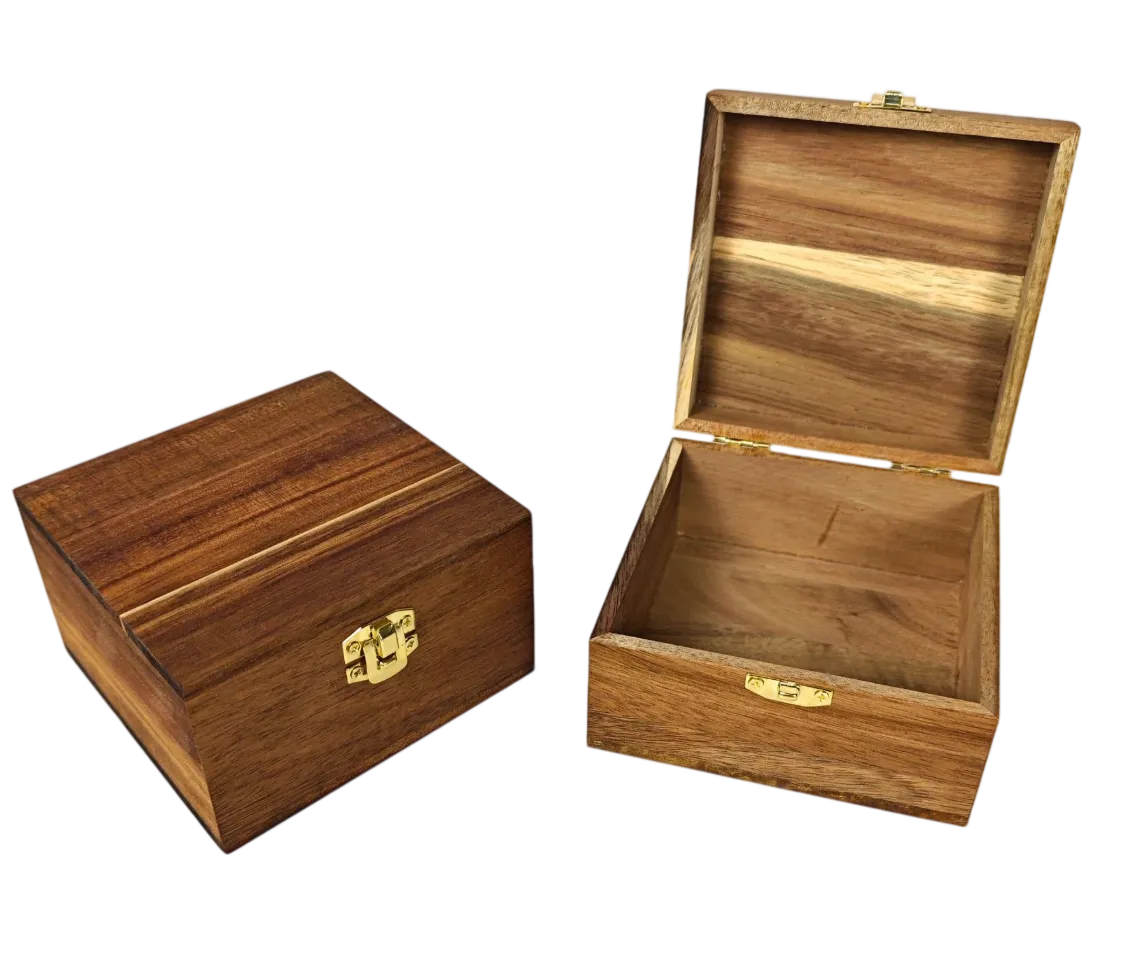
Our factory produces custom wooden boxes in five standard thickness ranges, each suited to different product types, box sizes, and quality tiers. Understanding these options helps you match thickness to your specific requirements without over-engineering (which wastes money) or under-engineering (which causes quality problems).
| Wood Thickness | Best For | Advantages | Notes |
|---|---|---|---|
| 3mm | Small gift boxes, light packaging, favor boxes | Lightweight, low cost, easy to laser cut | Not suitable for boxes over 15 cm or heavy products |
| 5mm | Tea boxes, jewelry boxes, cosmetic gift boxes, standard packaging | Good balance of cost and strength, most popular thickness | Recommended for most custom wooden packaging projects |
| 6–8mm | Storage boxes, watch boxes, educational boxes, premium gift boxes | More stable, premium feel, supports removable dividers | Ideal for boxes with internal structures or frequent handling |
| 10mm | Wine boxes, keepsake boxes, premium gift boxes, branded packaging | Stronger structure, better for hardware, more durable | Higher cost and weight, but justified for premium positioning |
| 12–15mm | Large boxes, heavy-duty storage, tool boxes, commercial display | Very strong and durable, supports heavy products | Usually used for larger orders or special industrial applications |
The most common thickness we produce is 5mm, accounting for about 60% of our custom wooden box orders. This thickness offers the best cost-performance ratio for gift boxes, tea boxes, jewelry boxes, and standard retail packaging. Buyers move to 6–8mm when they need internal dividers, premium positioning, or frequent opening and closing (like watch boxes or storage boxes). Buyers move down to 3mm when cost is the primary concern and the box size is under 15 cm. Buyers move up to 10mm+ when the product inside is heavy (like wine bottles), when the box needs to support stacking, or when the brand positioning is ultra-premium.
Recommended Thickness by Box Type
Different wooden box products have different structural requirements, usage patterns, and customer expectations. Here's what our factory typically recommends for each major box type based on 15+ years of OEM manufacturing experience.
Wooden Gift Boxes
For wooden gift boxes, we usually recommend 3–5mm plywood, MDF veneer, or pine depending on box size and brand positioning. Small favor boxes (under 10 × 10 cm) work fine with 3mm material because they're lightweight and don't experience much handling stress. Medium gift boxes (15 × 15 cm to 25 × 20 cm) should use 5mm material for better durability and a more premium feel. Large gift boxes (over 30 cm in any dimension) benefit from 6–8mm material to prevent lid warping and box flexing.
Gift boxes are typically used once (for presentation or gifting) and then either kept as keepsakes or repurposed for storage, so structural longevity is less critical than initial appearance and cost. However, if your brand positioning is premium or luxury, we recommend going up one thickness level (5mm instead of 3mm, 8mm instead of 5mm) because thicker wood feels heavier and more substantial, which customers associate with higher quality.
Wooden Tea Boxes
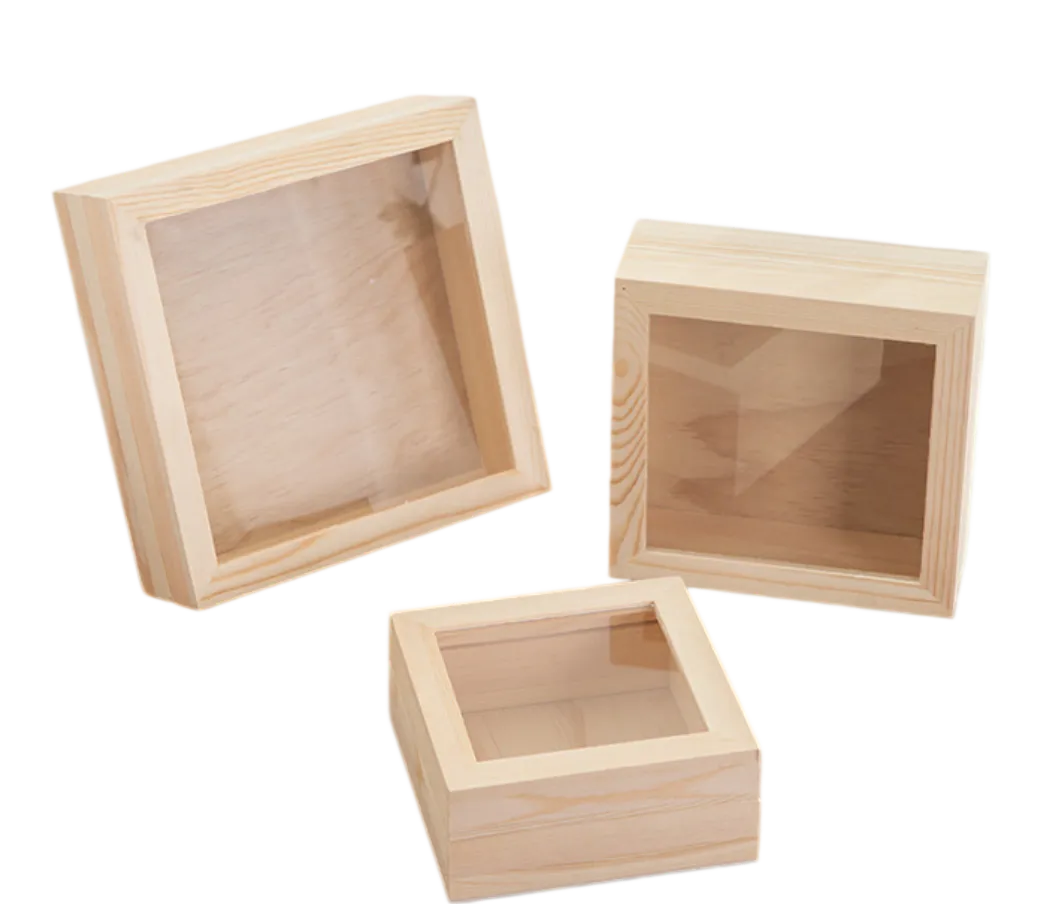
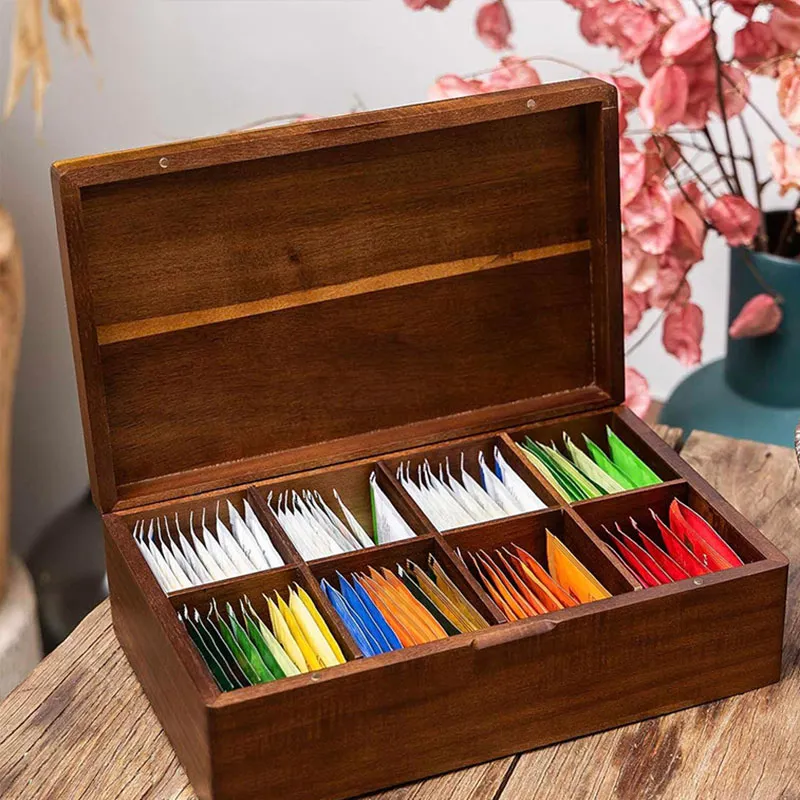
Tea boxes almost always require 5–8mm thickness because they typically include internal dividers (to separate different tea varieties), a glass or acrylic window in the lid (which requires a frame groove), and metal clasps or hinges. The dividers need slots routed into the box base, and those slots can't be cut into 3mm material without weakening the structure. Additionally, tea boxes are used repeatedly (daily or weekly), so they need to withstand frequent opening and closing without the lid becoming loose or warped.
For premium bamboo or acacia tea boxes targeting US and EU markets, we recommend 8mm material with 4mm dividers. This provides a solid, high-quality feel that matches the premium positioning of specialty tea brands. For mid-tier tea boxes with 6–12 compartments, 6mm box walls with 3mm dividers offer good stability at a reasonable cost. For budget tea boxes with fixed dividers (not removable), 5mm throughout is acceptable.
Wooden Watch Boxes
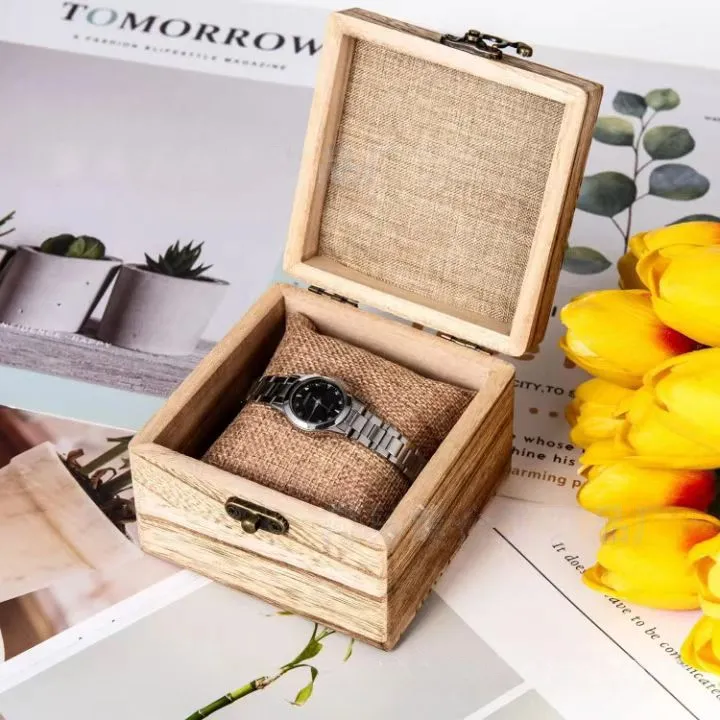
Watch boxes require 6–10mm thickness because they need to support heavy hardware (metal hinges, locks, clasps), internal cushions or pillows (which require mounting grooves), and often a glass display lid (which adds weight). Watch boxes are also handled frequently and expected to last for years, so durability is critical. A watch box that feels flimsy undermines the value perception of the watch inside.
For single-watch boxes, we typically recommend 8mm walls and lid with 5mm dividers (if the box has multiple slots). For multi-watch display boxes (4–12 watches), we recommend 10mm outer walls because the larger size and heavier lid require more structural support. The lid should never be thinner than 8mm for watch boxes because thin lids sag over time and the hinges can pull out of the wood.
Wooden Wine Boxes
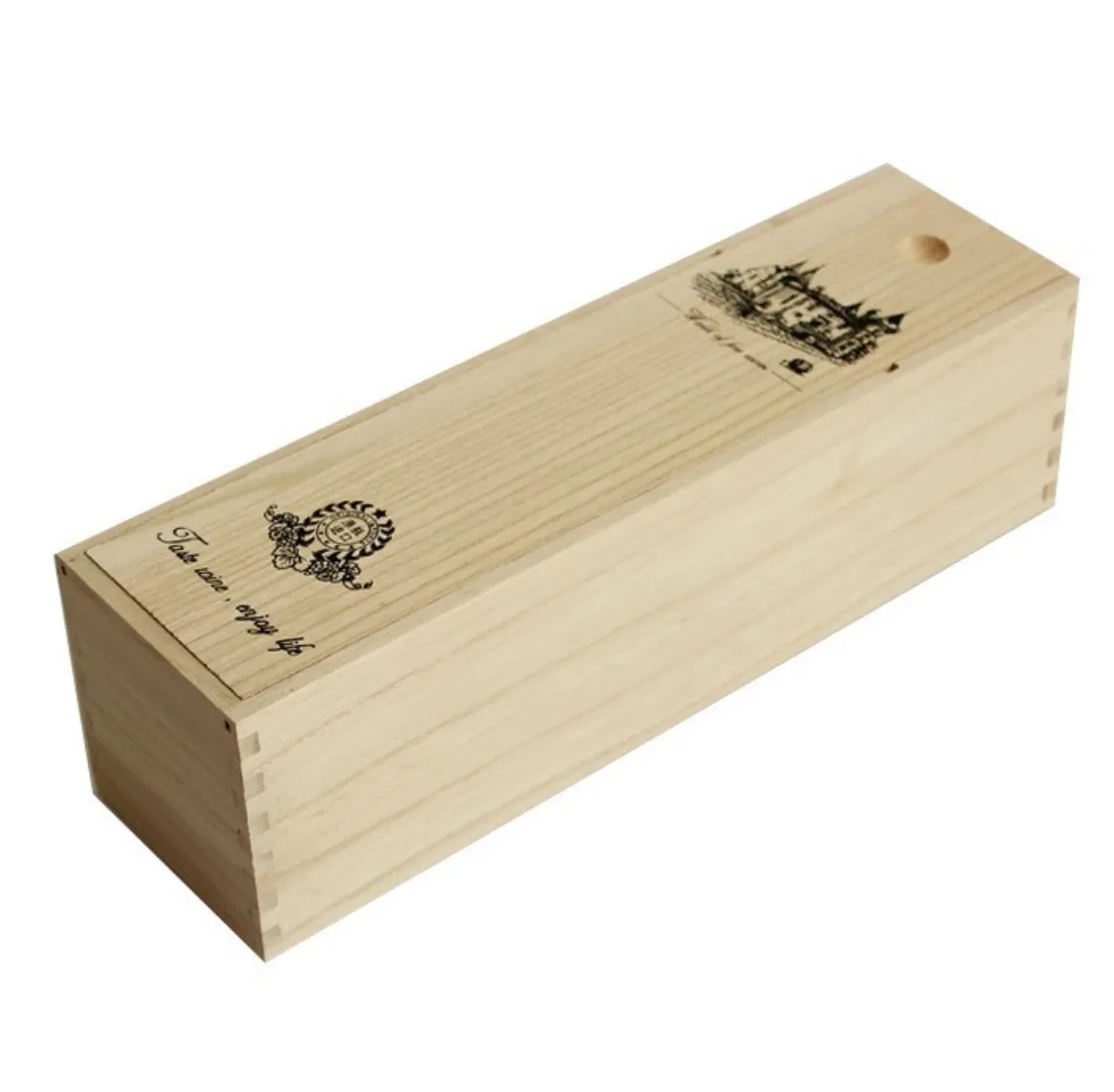
Wine boxes require 8–12mm thickness because wine bottles are heavy (750ml bottle = approximately 1.2 kg) and wine boxes are often shipped long distances or stored in cellars where humidity fluctuates. Thin wood will warp under the weight of the bottle, and the box needs to protect the bottle during transport. Additionally, wine boxes are often kept as collectibles or reused for storage, so customers expect solid construction.
For single-bottle wine boxes, we recommend 8–10mm pine or acacia with dovetail or finger-joint construction. For double-bottle boxes or wooden wine crates, we recommend 10–12mm material with reinforced corners. If the wine box includes a sliding lid or front panel, that panel should be at least 8mm thick to prevent warping. Wine boxes under 8mm thickness feel cheap and don't provide adequate protection for premium wine products.
Wooden Storage Boxes with Dividers
Storage boxes with removable dividers require 6–10mm outer walls and 3–5mm dividers depending on box size and divider design. The outer box needs to be thick enough to accommodate the divider slots (which are typically routed 40–50% through the wood thickness), and the dividers themselves need to be thick enough to stay rigid when inserted into the grid.
For small jewelry organizers (15 × 10 cm), 6mm walls with 3mm dividers work well. For medium craft supply boxes or spice organizers (25 × 20 cm), 8mm walls with 4mm dividers provide better stability. For large educational kit boxes or tool organizers (35 × 25 cm or larger), 10mm walls with 5mm dividers are recommended to prevent the box from flexing when fully loaded. If the dividers are too thin relative to the box size, they'll bow or fall out of the slots during handling.

Thickness Recommendations by Material
Different wood materials behave differently at the same thickness. Plywood is more stable than solid wood. MDF with veneer is heavier than bamboo. Paulownia is lighter than pine. Understanding material characteristics helps you choose the right thickness for each material type.
Plywood Thickness for Wooden Boxes
Plywood is the most common material for custom wooden boxes because it's stable (doesn't warp easily), cost-effective, and available in multiple thicknesses. Our factory stocks 3mm, 5mm, 8mm, and 10mm plywood for wooden box production. The most popular is 5mm, which offers good strength-to-weight ratio and works well for laser cutting, UV printing, and veneer application.
For small boxes (under 15 cm), 3mm plywood is sufficient. For medium boxes (15–30 cm), 5mm is recommended. For large boxes (over 30 cm) or boxes with dividers, 8mm provides better stability. Plywood thicker than 10mm is rarely used for gift boxes because the weight and cost become prohibitive — at that point, solid wood is usually a better choice.
Plywood construction works well for dovetail joints, finger joints, and butt joints with internal corner blocks. The layered structure prevents splitting when screws or nails are used, making it ideal for boxes that require hardware like hinges, clasps, or corner brackets.
MDF with Wood Veneer
MDF (medium-density fiberboard) with wood veneer is popular for premium gift boxes because it provides a smooth surface for UV printing, hot foil stamping, and full-color artwork. However, MDF is heavier than plywood at the same thickness, so we typically recommend 5mm MDF for small to medium boxes rather than going thicker.
For boxes over 25 × 20 cm, MDF weight becomes an issue — a 30 × 20 × 10 cm box made from 8mm MDF can weigh 1.5–2 kg empty, which significantly increases shipping costs. For large boxes, we recommend switching to plywood with veneer or using MDF only for the lid (where the smooth surface is most visible) and plywood for the body.
MDF is not recommended for humid environments or products that will be stored long-term in basements or bathrooms, as it can swell if moisture penetrates the veneer. For such applications, bamboo, paulownia, or solid wood are better material choices even if they cost more.
Pine Wood Thickness
Pine is the most economical solid wood option for custom wooden boxes. It's lightweight, easy to work with, accepts stain and paint well, and is widely available. For pine boxes, we typically recommend 8–12mm thickness because solid wood is less stable than plywood and needs extra thickness to resist warping.
For wine boxes, keepsake boxes, and storage boxes, 10mm pine with finger-joint or dovetail construction provides good durability at a mid-tier price point. For large boxes or boxes that will be stacked, 12mm pine is recommended. Pine thinner than 8mm is not recommended for solid wood construction because the wood can split along the grain during CNC cutting or when hardware is installed.
Pine works well for laser engraving, branding, and natural wood finishes. If you want a rustic or farmhouse aesthetic, pine at 10–12mm thickness provides visible grain texture and a substantial feel that customers associate with authentic wooden craftsmanship.
Paulownia Wood Thickness
Paulownia (also called "tung wood" or "princess tree wood") is an extremely lightweight wood popular for large boxes where weight is a concern. At the same thickness, paulownia weighs about 40% less than pine, making it ideal for storage boxes, shipping crates, and promotional boxes that need to minimize freight costs.
Because paulownia is softer than pine, we recommend adding 2mm to the standard thickness — if you would normally use 8mm pine, use 10mm paulownia instead. This compensates for the lower density and prevents dents or damage during handling. Paulownia is not recommended for boxes that hold heavy items or require frequent handling, but it works well for lightweight gift boxes, tea boxes, and decorative storage boxes.
Acacia, Walnut, and Bamboo
Premium hardwoods like acacia and walnut, as well as bamboo, are typically used at 8–12mm thickness for high-end gift boxes, watch boxes, jewelry boxes, and branded packaging. These materials are more expensive than pine or plywood, so buyers usually accept the higher cost and weight in exchange for the premium appearance and durability.
Acacia has a rich dark grain and is very hard, making it ideal for boxes that will be handled frequently or last for years. We recommend 10mm thickness for acacia boxes to showcase the grain depth and provide a solid, heavy feel. Walnut is even more expensive and is typically reserved for ultra-premium boxes at 10–12mm thickness. Bamboo is lighter than hardwood and more stable, making it a good choice for eco-conscious brands at 8–10mm thickness.

How Box Size Affects Wood Thickness
As a general rule, larger boxes require thicker material to maintain structural integrity and prevent warping. A 10 × 10 cm box can use 3mm material without issues, but a 40 × 30 cm box at 3mm thickness will flex and warp immediately. Here's our factory recommendation by box size:
| Box Size | Suggested Thickness | Example Products |
|---|---|---|
| Under 15 × 10 cm | 3–5mm | Jewelry box, ring box, small gift box, favor box |
| 15 × 15 cm to 20 × 15 cm | 5–6mm | Tea box, cosmetic box, watch box, medium gift box |
| 25 × 20 cm to 30 × 20 cm | 6–8mm | Storage box, educational box, multi-compartment organizer |
| 30 × 25 cm to 40 × 30 cm | 8–10mm | Wine box, large gift box, tool box, display box |
| Over 40 × 30 cm | 10–15mm | Wooden crate, shipping box, commercial storage |
The relationship between size and thickness is not linear — doubling the box size requires more than doubling the thickness because larger surfaces have more area to flex and warp. Additionally, larger boxes are more likely to be used for heavier products, stacked during storage, or subjected to rough handling during shipping, all of which require thicker material.
When designing a custom wooden box, always consider the diagonal dimension as well as the length and width. A 40 × 10 cm box (long and narrow) can use thinner material than a 30 × 30 cm box (square) because the narrow dimension provides more resistance to flexing. Similarly, a tall box (15 × 15 × 30 cm) needs thicker walls than a flat box (30 × 30 × 5 cm) because vertical walls are more prone to bowing.
Thickness for Lids, Bottoms, Dividers, and Inserts
When specifying wood thickness for a custom wooden box, buyers often focus only on the outer walls and forget about the lid, bottom, dividers, and inserts. Each of these components has different structural requirements and thickness recommendations.
Lid Thickness
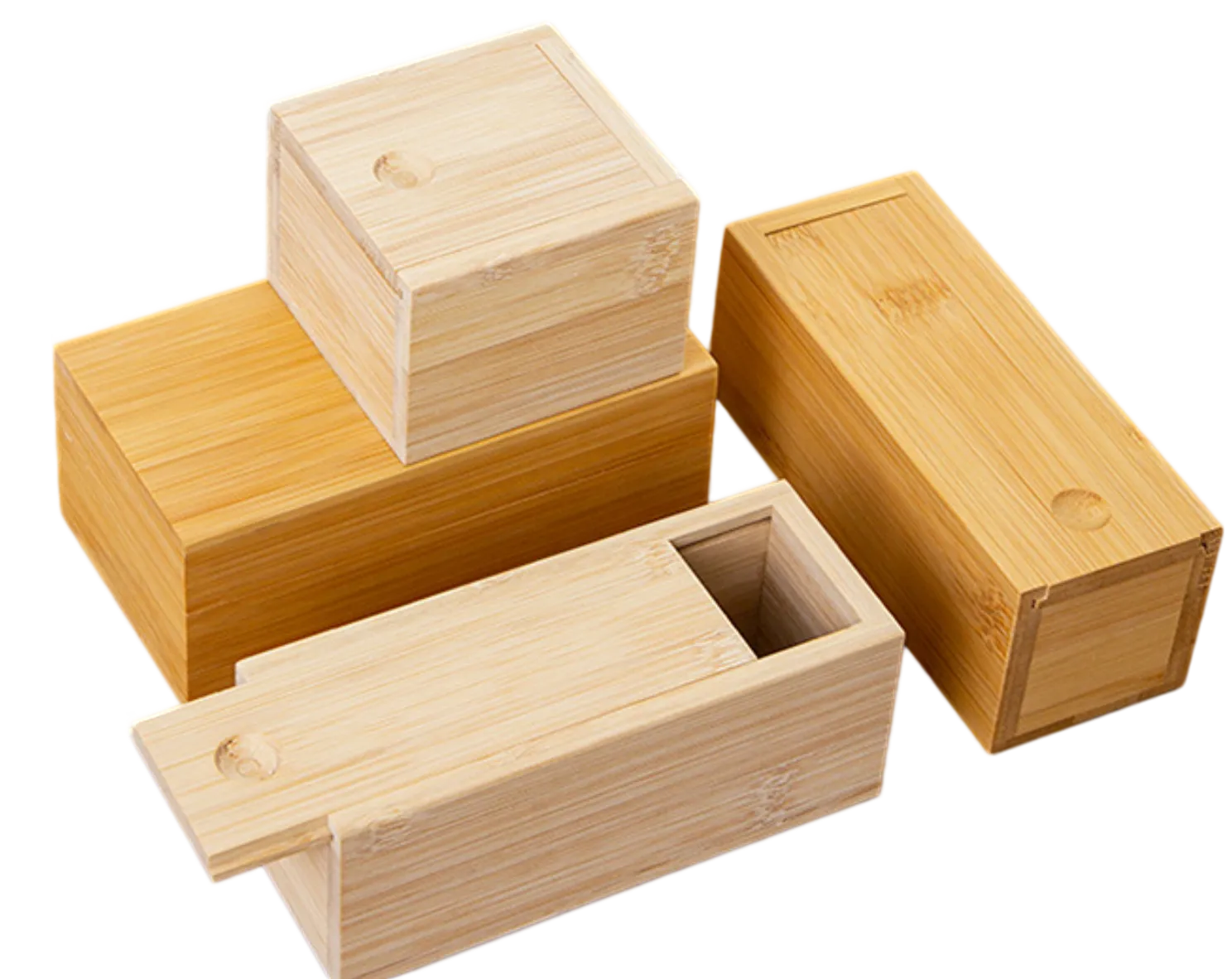
Lids are the most visible part of a wooden box and the component most prone to warping, so they often require thicker material than the box walls. For hinged lids, we recommend matching the lid thickness to the wall thickness or going 1–2mm thicker to prevent sagging. For sliding lids, the lid should be 1–2mm thinner than the wall grooves to allow smooth movement.
For laser-cut lids with decorative patterns or artwork, we recommend minimum 3mm thickness for simple patterns and 5mm for complex patterns with small details. If the laser-cut pattern covers more than 40% of the lid surface area, the lid will be weak and should be backed with a solid panel or use thicker material (6–8mm) to compensate.
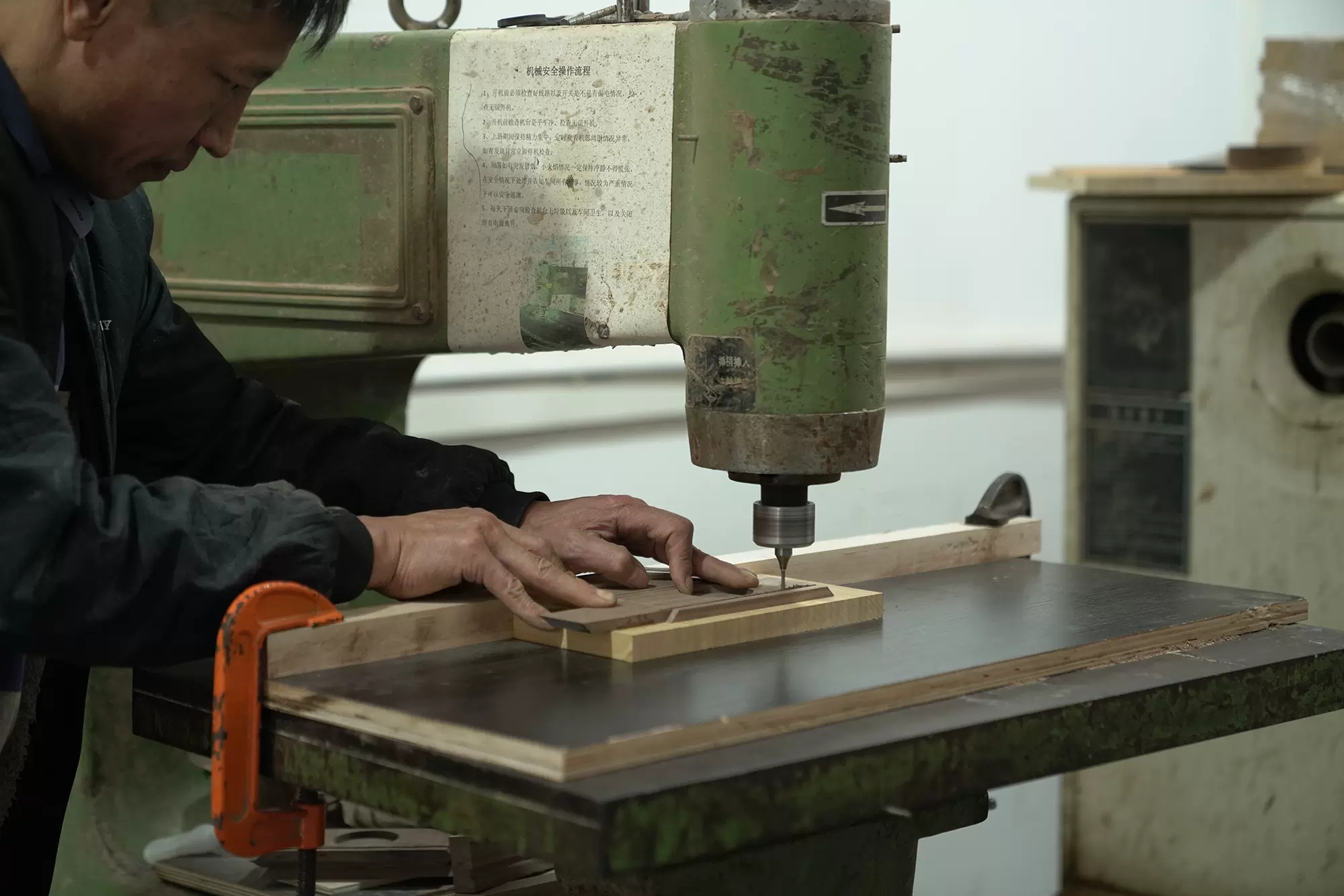
For lids with embedded glass or acrylic windows (common in tea boxes and display boxes), the lid frame needs to be at least 5mm thick to accommodate the groove for the glass panel (typically 2mm glass + 1mm clearance + 2mm remaining wood on each side).
Bottom Thickness
The bottom of a wooden box can often be thinner than the walls because it's supported on all four edges and doesn't flex as much. For small boxes (under 20 cm), the bottom can be 3mm even if the walls are 5mm. For medium boxes (20–30 cm), we recommend matching the bottom thickness to the wall thickness. For large boxes (over 30 cm) or boxes that will hold heavy products, the bottom should be as thick as or thicker than the walls.
If the box will be lifted or carried when fully loaded, the bottom needs to support the full weight without bowing. For wine boxes and heavy storage boxes, we sometimes recommend adding a reinforcement strip (a solid wood bar glued lengthwise across the bottom center) to prevent sagging.
Divider Thickness
Removable dividers are typically 3–5mm thick depending on the box size and divider height. For small jewelry boxes with 5 cm tall dividers, 3mm is sufficient. For larger storage boxes with 8–10 cm tall dividers, 4–5mm provides better stability and prevents bowing.
The divider thickness must match the slot width routed into the box base. If you use 4mm dividers, the slots must be exactly 4mm wide (or slightly wider, like 4.2mm, to allow easy insertion). If the slots are too wide, the dividers will rattle and fall out. If the slots are too narrow, the dividers won't fit.
For slotted grid dividers (where dividers interlock with notches cut halfway through), the notch depth must be exactly half the divider thickness. This means 3mm dividers have 1.5mm deep notches, and 5mm dividers have 2.5mm deep notches. Our factory's CNC machines can cut these slots with ±0.1mm tolerance to ensure tight, secure fits.

How Thickness Affects Logo Engraving and Printing
The customization methods you plan to use (laser engraving, UV printing, hot foil stamping, CNC carving) directly impact minimum thickness requirements. Different methods remove or add material at different depths, and thin wood limits what you can achieve.
Laser engraving burns into the wood surface, typically removing 0.3–0.8mm of material depending on power and speed settings. For shallow engraving (logo outlines, text), 3mm material is acceptable. For deep engraving (3D relief, detailed artwork), we recommend minimum 5mm material to allow 1–1.5mm engraving depth while maintaining structural integrity.
UV printing applies ink on top of the surface and doesn't remove material, so it works on any thickness. However, UV printing requires a flat, smooth surface, which means MDF veneer or sanded plywood work better than rough solid wood. Hot foil stamping presses metallic foil onto the surface under heat and pressure, requiring flat, stable material — minimum 5mm recommended to prevent flexing during stamping.
CNC carving removes significant material (2–5mm depth) to create 3D textures, recessed panels, or sculptural details. For CNC work, we recommend minimum 8mm material, and 10–12mm if the carving covers a large area or goes particularly deep. Laser-cut patterns that go all the way through the wood (like decorative screens or window cutouts) work on 3–5mm material, but the remaining frame around the cutout should be at least 10mm wide to maintain strength.
How Thickness Affects Cost, MOQ, and Shipping
Thickness directly impacts three major cost factors: material cost, production difficulty, and shipping weight. Understanding these relationships helps you balance quality and budget.
Material cost scales roughly linearly with thickness — 8mm material costs about 60% more than 5mm material because it uses 60% more raw material. However, production cost doesn't scale the same way because thicker material requires more CNC cutting time, more sanding, and sometimes stronger glue and hardware. A 10mm box might cost 70–80% more to produce than a 5mm box, not just 60% more.
Shipping cost is driven by weight, and weight increases with thickness. A 25 × 20 × 8 cm box made from 5mm plywood weighs approximately 400g. The same box in 8mm material weighs approximately 600g (50% heavier). For air freight or courier shipping, this weight difference can add $2–4 per unit. For ocean freight in full containers, the impact is smaller but still significant — a 40-foot container holds about 8,000 boxes at 5mm thickness or about 6,500 boxes at 8mm thickness due to weight limits.
| Thickness | Relative Material Cost | Relative Weight | Best Order Quantity |
|---|---|---|---|
| 3mm | 1.0× (baseline) | Light (100%) | 100–1000 pcs |
| 5mm | 1.4× | Medium (140%) | 100–1000 pcs |
| 8mm | 1.6× | Heavy (180%) | 250–1000 pcs |
| 10mm+ | 2.0× | Very Heavy (230%+) | 500–1000 pcs |
MOQ (minimum order quantity) is typically not directly affected by thickness, but thicker boxes are more expensive per unit, so buyers naturally order smaller quantities. Our factory MOQ is 100 pieces for simple designs and 250–500 pieces for complex designs regardless of thickness. However, for 10mm+ boxes, we recommend ordering at least 500 pieces to amortize the tooling and setup costs across enough units to bring the per-unit price down to a reasonable level.
Manufacturer's Recommendation: How to Choose the Right Thickness
As a custom wooden box manufacturer with 15+ years of OEM experience producing over 2 million wooden boxes for brands in 60+ countries, we don't recommend choosing wood thickness based only on appearance or copying what competitors use. The correct thickness should be determined by product weight, box size, lid structure, divider design, hardware requirements, branding method, and shipping method.
Here's our simple decision framework: Start with box size. Under 15 cm → consider 3–5mm. 15–30 cm → consider 5–8mm. Over 30 cm → consider 8–12mm. Then adjust for product weight. Light products (under 200g) can use thinner material. Heavy products (over 500g) need thicker material. Then adjust for structure. Boxes with dividers need thicker walls. Boxes with glass lids need thicker frames. Boxes with heavy hardware need thicker mounting surfaces.
Then adjust for usage frequency. One-time gift boxes can be thinner. Storage boxes used daily need to be thicker. Finally, adjust for brand positioning. Budget brands can use minimum recommended thickness. Premium brands should go one level thicker for better feel and durability. This framework gives you a good starting point, and our quote desk can refine the recommendation once we see your specific requirements.
The right wood thickness is not the thickest or the cheapest — it's the thickness that balances your quality requirements, budget constraints, and usage context. Over-engineering wastes money. Under-engineering causes returns and damages your brand reputation.
Ready to Choose the Right Thickness for Your Custom Wooden Box?
If you're not sure which wood thickness is suitable for your custom wooden box project, send us your box size, product weight, material preference, logo method, packaging requirements, and order quantity. Our team can recommend the optimal wood thickness, structure, material, and packaging solution based on your project requirements and budget. We produce wooden boxes from 3mm to 15mm thickness in plywood, MDF, pine, paulownia, bamboo, acacia, and walnut with MOQ from 100 pieces. Sample lead time is 7–10 working days and production lead time is 30–40 days for most orders.