info@xmchichomeware.com +86 189 6009 8762 60개 이상 국가로 수출
SustainabilityMarch 25, 20269 min read

Our sustainable sourcing practices in 2026

FSC chain of custody, plantation-grown paulownia, lower-VOC finishes, and how we keep wood waste under 8% — written for buyers who actually have to defend their supply chain.

Our sustainable sourcing practices in 2026

Sustainability used to be a marketing line. Today it is a procurement requirement from most of the European, Japanese and Amazon brands we serve — a series of specific certifications, documents and supplier audits that have to clear before any box ships.

This article is what our actual practices look like in 2026, written for the buyer who has to defend their supply chain to a sustainability officer, an Amazon Brand Registry compliance team, or an EU CBAM auditor. No vague claims — just what we do and the documents we can produce to prove it.

FSC chain of custody — and what it really means

Every species in our catalog — paulownia, pine, bamboo, acacia, walnut and oak — is available with FSC (Forest Stewardship Council) certification on request. We hold FSC chain of custody certification through our timber suppliers, which means there is documented traceability from the forest stand or plantation to your shipping container.

The important thing to understand about FSC is that the certification covers the wood, not the box. Our boxes are FSC-certified when both (a) the timber comes from FSC-certified suppliers AND (b) the production batch passes through our certified chain of custody process. We have to keep batch records, segregate FSC stock from non-FSC stock during production, and produce a per-shipment certificate that traces back to the source.

For buyers selling into the EU, this is increasingly non-optional. The EU Deforestation Regulation (EUDR), which entered enforcement in 2025, requires importers of wood products to demonstrate that the wood is not linked to deforestation after December 31, 2020. FSC certification is the simplest way to satisfy this requirement.

We charge a small premium (typically 4-7%) for FSC orders to cover the additional documentation and segregation costs. For most buyers this is recovered many times over in the markets it opens.

Paulownia — plantation-grown by definition

Paulownia is the closest thing the woodworking industry has to a renewable timber. The trees mature in 5-7 years (versus 30-60 years for oak or walnut), and almost all commercial paulownia is plantation-grown rather than harvested from natural forests.

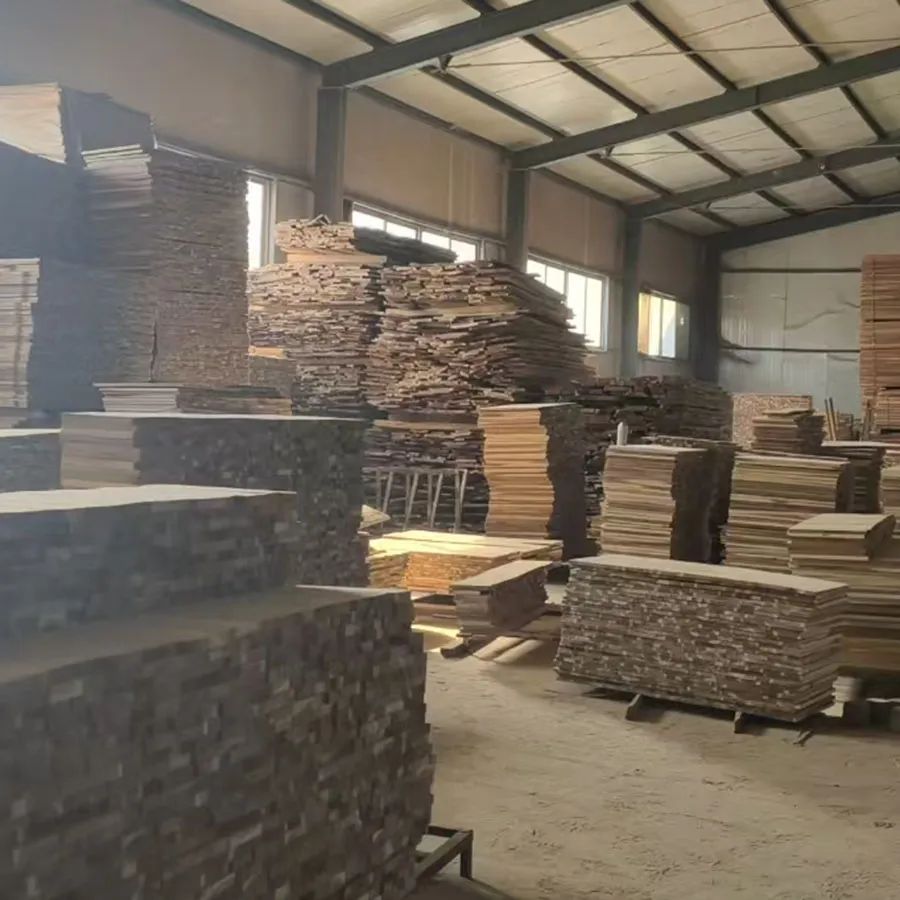
Our paulownia comes from managed plantations in Henan and Anhui provinces. The plantations are owned by farming cooperatives that rotate harvests so that approximately 1/6 of the planted area is harvested each year, with new seedlings planted to replace harvested trees. The result is a continuous timber supply that does not draw down the forest stock.

For buyers with explicit eco-positioning, paulownia is the obvious choice — and we can document the plantation source on request.

Plantation-grown paulownia stock in our timber yard

Lower-VOC finishes (REACH and CARB compliant)

Volatile organic compounds (VOCs) are the off-gassing chemicals that produce the "new box smell" — and that, at higher concentrations, contribute to indoor air quality problems. Standard nitrocellulose lacquers, which are the cheapest finish option, can off-gas at levels that fail EU REACH and US CARB Phase 2 limits.

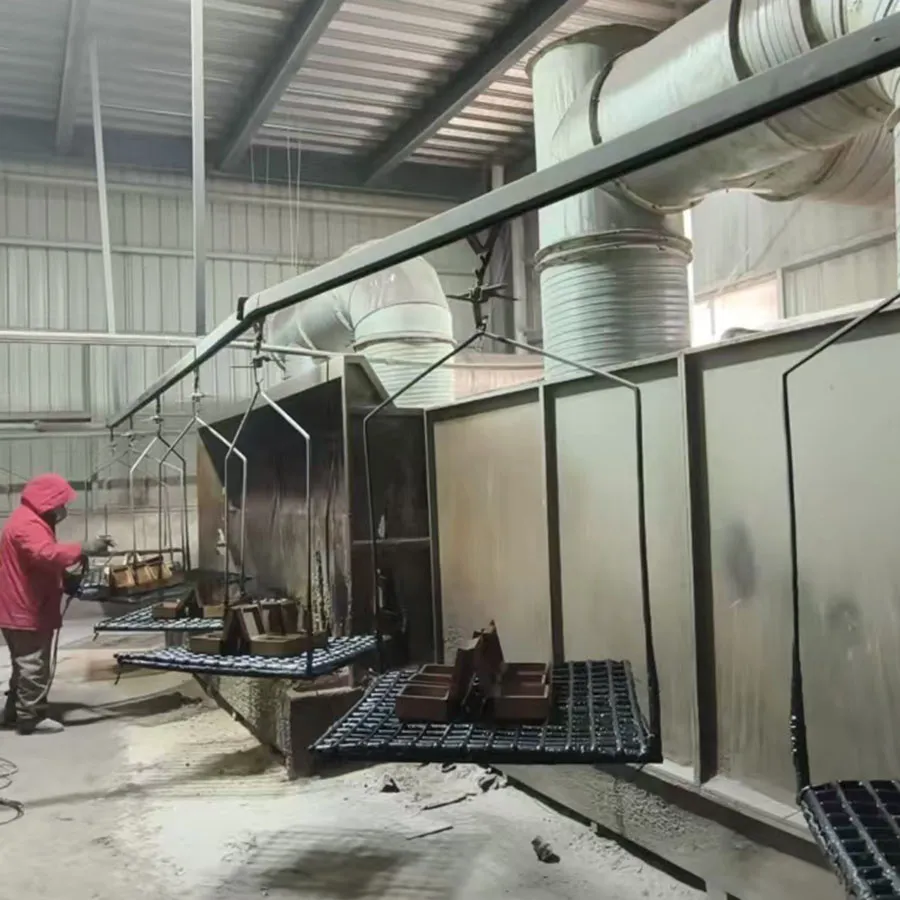
We have moved our finishing line to water-based lacquers as the default. Water-based finishes contain a fraction of the VOC content of nitrocellulose, dry faster, and produce a similar visual result. The trade-off is cost (about 15% more per liter) and a slightly thinner film build, which we compensate for with an extra coat.

For premium products we use natural plant-oil finishes — tung oil, linseed oil, beeswax. Zero VOC, fully food-safe, and the surface ages beautifully. The downside is longer cure times (up to 72 hours per coat) and more demanding application — these finishes are not appropriate for high-volume budget products.

All finishes we offer are documented for REACH compliance (EU), CARB Phase 2 (US), and FDA food contact safety (where applicable). Test reports are available on request.

Waste reduction in cut-to-size

Wood waste is the unsexy sustainability issue. Most factories generate 18-25% offcut waste from their cut-to-size operations — material that is paid for but ends up burned for biomass heat or sent to landfill.

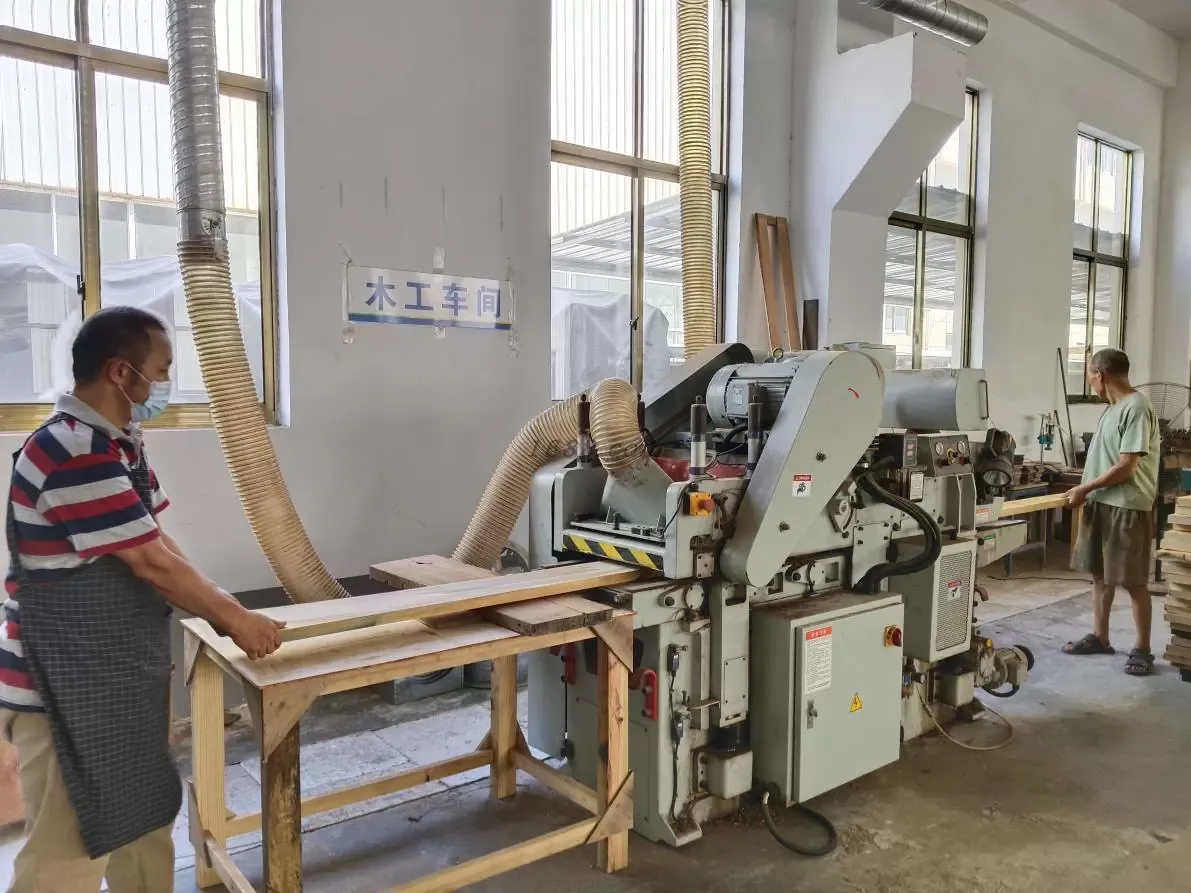
Our nesting software optimizes part layouts on each board to push offcut waste below 12% on most orders, and below 8% on standard SKUs we run repeatedly. For comparison, a 4% reduction in waste on a 20-foot container of paulownia is roughly $400-600 of saved material — small per unit but meaningful at volume.

The remaining offcuts go to a sister facility that produces wooden beads, handles, drawer pulls and small turned components. Almost nothing reaches landfill. Sawdust is collected and sold to a particle board manufacturer in the same industrial park. The only real waste from our process is the trim from the very ends of boards, which goes to local biomass heating.

Phytosanitary documentation

All solid wood shipments leave with phytosanitary certificates issued by China customs, confirming the wood is treated and pest-free per ISPM-15 standards (the international standard for wood packaging material). This is critical for shipments to the EU, US, Australia, Japan and Korea — without phyto certificates, your container can be quarantined or refused at the destination port.

Our facility is registered for ISPM-15 heat treatment and our finished goods carry the IPPC stamp showing the treatment date and our facility code. The phyto certificate accompanies the bill of lading and clears with customs documentation in under 24 hours at most ports.

What we still need to do better

Sustainability is not a box you check — it is a continuous direction. Three things we are working on for 2026-2027:

  • Switching all internal forklifts and yard vehicles to electric. Currently 60% of our internal fleet is electric; target is 100% by end of 2026.
  • Installing rooftop solar across our two main production buildings. Estimated to cover 30-40% of our daytime electricity load.
  • Working with our pine and oak suppliers to expand FSC coverage from 70% to 95% of our timber stock by mid-2027.

None of these are revolutionary — they are the kind of incremental work that adds up over years. We will publish updates on this Journal as each gets done.

What we tell buyers asking for "the most sustainable option"

The honest answer is: there is no single "most sustainable" choice. Different products optimize for different environmental dimensions, and trade-offs are always involved. Here is the framework we use when buyers ask us to recommend a sustainability-led spec.

1. Lowest carbon footprint per box

Plantation paulownia. The fast regrowth cycle and very low density (less mass means less embodied energy in growing, drying, machining and shipping) makes paulownia the lowest-carbon-per-unit choice we offer. For carbon-conscious brands tracking Scope 3 emissions, paulownia is almost always the right answer.

2. Lowest forest impact

Bamboo. The 5-7 year regrowth cycle (versus 30-60 years for hardwood) means bamboo represents zero net forest harvest pressure when sourced from FSC-certified plantations. The root systems also stabilize soil and improve degraded land.

3. Best end-of-life behavior

Solid wood with oil or wax finish, no lacquer. Fully compostable at end of life, breaks down in normal soil within 3-7 years. The lacquer in standard finishes prevents biodegradability — for true cradle-to-cradle products, oil or wax only.

4. Lowest indoor air quality impact

Water-based lacquer or natural oil finishes. VOC emissions during use are the most-overlooked sustainability factor — products that off-gas indoors for years contribute to indoor air quality problems even if the source materials were technically "sustainable."

Why we ship documentation with every order

For European customers especially, sustainability claims without documentation are increasingly worthless. The EU Deforestation Regulation, the German Supply Chain Due Diligence Act (LkSG), and the broader CSRD (Corporate Sustainability Reporting Directive) all require importers to substantiate environmental claims with audit-grade documentation. The era of "we are committed to sustainability" without proof is over.

Our standard sustainability documentation packet, included with every shipment that meets eco specifications:

  • FSC certificate of origin with batch traceability back to forest stand or plantation
  • Phytosanitary certificate per ISPM-15 with treatment date and IPPC mark
  • Finish emission test report (REACH for EU, CARB Phase 2 for US, both available)
  • Materials declaration listing species, source country, and plantation/forest type
  • Carbon footprint estimate per unit (calculated using DEFRA emission factors)
  • End-of-life disposal guidance for the product (recyclable / compostable status)

Frequently asked sustainability questions

Is the FSC premium worth it?

For products selling in EU markets or to corporate buyers with sustainability procurement requirements: yes, almost always. The 4-7% cost premium is recovered many times over in market access, retail buyer acceptance, and reduced compliance risk. For products selling in markets where FSC is not commercially relevant: probably not, unless the brand specifically markets the certification to consumers.

Should I use recycled materials in my packaging?

For paper outer cartons, sleeves and tissue: yes, recycled content is widely available and cost-neutral. We use 80%+ post-consumer recycled paper for almost all secondary packaging by default. For wooden boxes themselves: not really — recycled wood is rarely available in the consistent quality and dimensions needed for boxes. Better to focus on FSC-certified virgin materials with documented origin.

What about carbon offsets for shipping?

We do not currently offset our shipments by default — buyers who want offsetting do so through their own carbon programs (often Climate Neutral, Pachama, or company-specific arrangements). We can provide carbon footprint estimates per shipment if needed for offsetting calculations. Sea freight is a relatively low-carbon mode per kg-km; air freight is the carbon problem and we strongly recommend buyers avoid air freight for wooden boxes wherever possible.

Are bamboo boards really as eco-friendly as people say?

Mostly yes, with one caveat. Bamboo growing is genuinely sustainable. Bamboo manufacturing involves laminating strips with adhesives — and cheap suppliers use formaldehyde-based adhesives that fail EU and California air quality standards. Reputable suppliers (we work with E0 and E1-grade laminators) use low-emission adhesives. Always ask for emission test reports if you are positioning the product as eco-premium. Cheap bamboo can be a worse environmental story than thoughtful hardwood.

Sustainability claims that cannot be documented are marketing. The certificates and audit trails are what your customers, regulators and auditors actually accept.

For buyers evaluating us against other factories, we encourage you to ask the same documentation questions of everyone in your shortlist: FSC certificate, REACH/CARB compliance reports, phyto registration, and audit history. The factories that can produce the documents within 48 hours are the factories that actually live the practices. Everyone else is selling you the marketing version.

Filed under Sustainability · Published March 25, 2026
Share: Email