The Complete Guide to Wood, Finish & Hardware
Choosing the right wooden box starts with choosing the right material. This guide walks through the five wood species we work with every day, eight surface finishes, seven branding methods, and every hinge, lock and magnet we install — so you can make the call with confidence before the first sample is cut.
How to Choose Your Wooden Box
A 6-step buyer flow — from defining your use case to confirming production. Most B2B buyers cycle through these in order before requesting samples.
Identify Your Use Case
Define what the box will hold and how it will be used — retail packaging, premium gifting, storage, display, or shipping. Use case drives weight, durability, and finish requirements.
Choose a Wood Species
Match aesthetic and budget: paulownia (lightest, best freight cost), pine (clean grain, paint-friendly), bamboo (sustainable, modern), acacia (rich grain, mid-range), walnut (premium chocolate hardwood).
Pick a Closure Type
Hinged for everyday opening; magnetic for premium clean look; sliding for hardware-free freight savings; drawer for organized access; lock for secure storage; open top for display.
Specify Finish and Surface
Choose between natural oil (food-safe, warmest tone), matte lacquer (clean modern), painted (color flexibility), stained (richer color), or torched (rustic). Each affects feel, durability, and brandability.
Add Branding
Laser engraving for permanence and fine detail; hot foil for luxury feel; screen print for color; debossing for premium texture; brass nameplate for jewelry-grade products.
Confirm Quantity and Lead Time
Match MOQ to your sales velocity (typical 200–500 for our line); plan 25–35 days from confirmed sample. Order samples first if it is a new design.
Five woods, side by side
A quick comparison of the five woods that account for over 95% of our annual production. Use this as a shortcut — then read the full profile for the species that fits your brief.
| Wood | Density | Hardness (Janka) | Color | Best for | Price |
|---|---|---|---|---|---|
| PaulowniaThe Empress Tree | ~280 kg/m³ | ~300 | Pale cream / blonde | High-volume gift & subscription boxes | $$$$ |
| PineThe Workhorse | ~510 kg/m³ | ~380 | Pale yellow → amber | Wine and whisky crates with branded burn-marks | $$$$ |
| BambooThe Eco Hardwood | ~700 kg/m³ | ~1380 | Pale gold or caramel | Tea, coffee and pod storage with food-safe finish | $$$$ |
| AcaciaThe Character Wood | ~750 kg/m³ | ~2300 | Honey → chocolate | Kitchen and dining boxes — bread bins, salt cellars, cutlery caddies | $$$$ |
| WalnutThe Luxury Standard | ~640 kg/m³ | ~1010 | Deep chocolate | Single and multi-watch presentation boxes | $$$$ |
Paulownia — The Empress Tree
Half the weight of pine. Doubly stable.
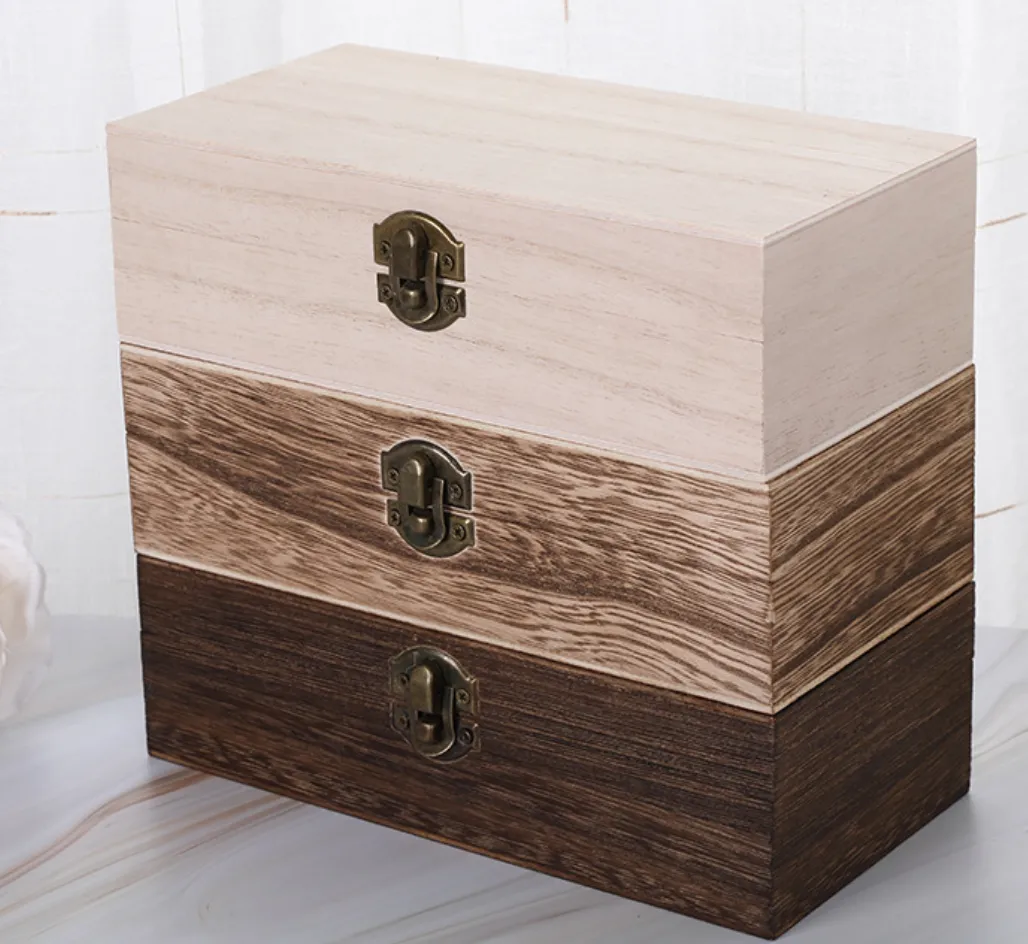
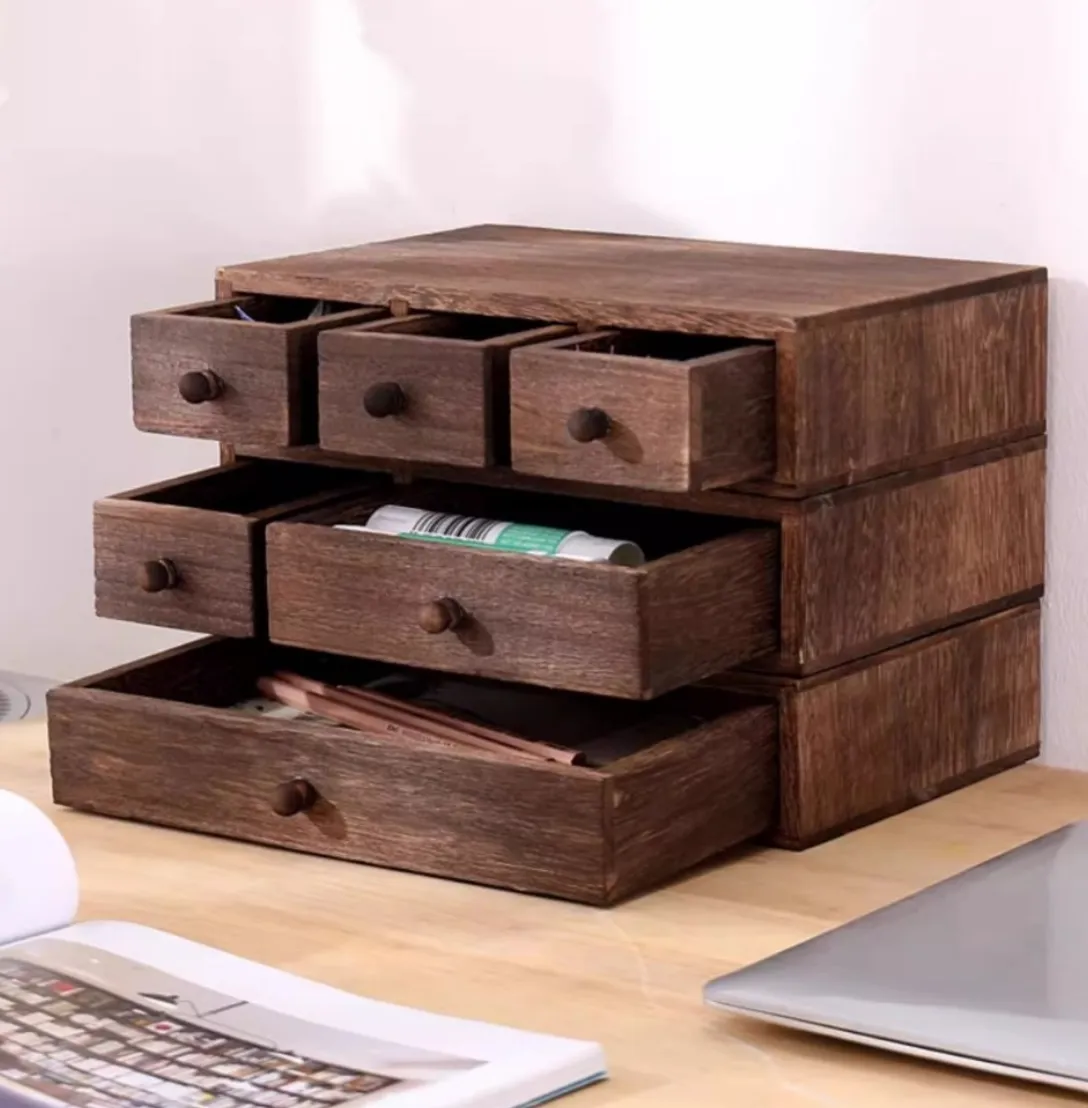
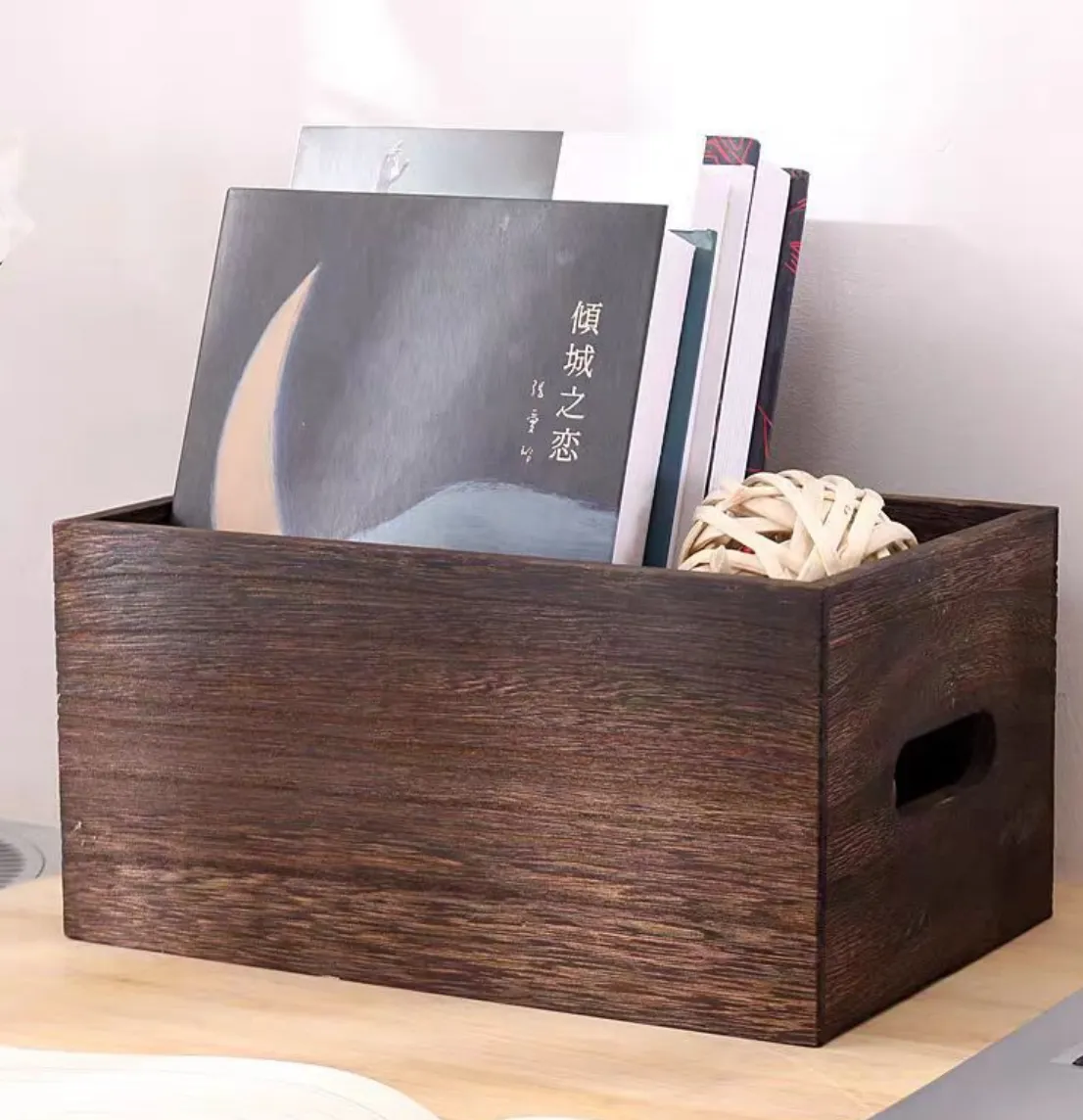
Origin & history. Native to central and northern China — the “empress tree.” Plantation-grown across Shandong and Anhui where it reaches harvest size in just 5–7 years, making it one of the most renewable timbers on earth.
Visual character. Pale cream to blonde, with a perfectly straight even grain and a soft satin sheen. Almost no visible figure — which makes it the perfect canvas for laser engraving, hot foil and printing.
Why buyers choose it
- Lightest commercial timber on the market — direct savings on freight, especially on large gift boxes.
- Dimensionally stable through humidity swings — won’t warp or crack between Guangzhou and Hamburg.
- Crisp laser engraving with no scorching halo, even at fine resolutions.
- Pale neutral surface accepts any stain, paint or print without color contamination.
Things to consider
- Soft surface — dents under impact. Best for presentation, not heavy daily handling.
- Not naturally water-resistant; sealing is required for moist environments.
Best for
Pine — The Workhorse
Affordable, characterful, ages beautifully.
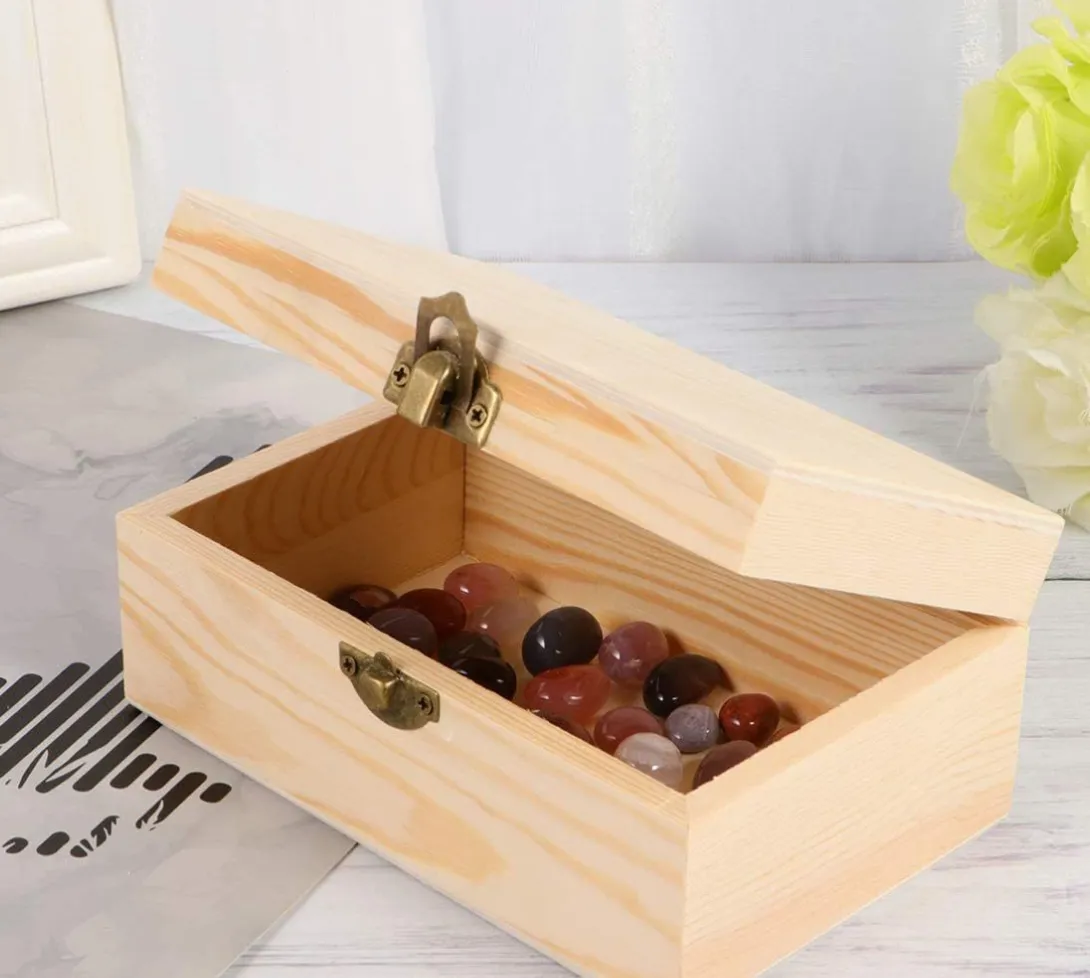
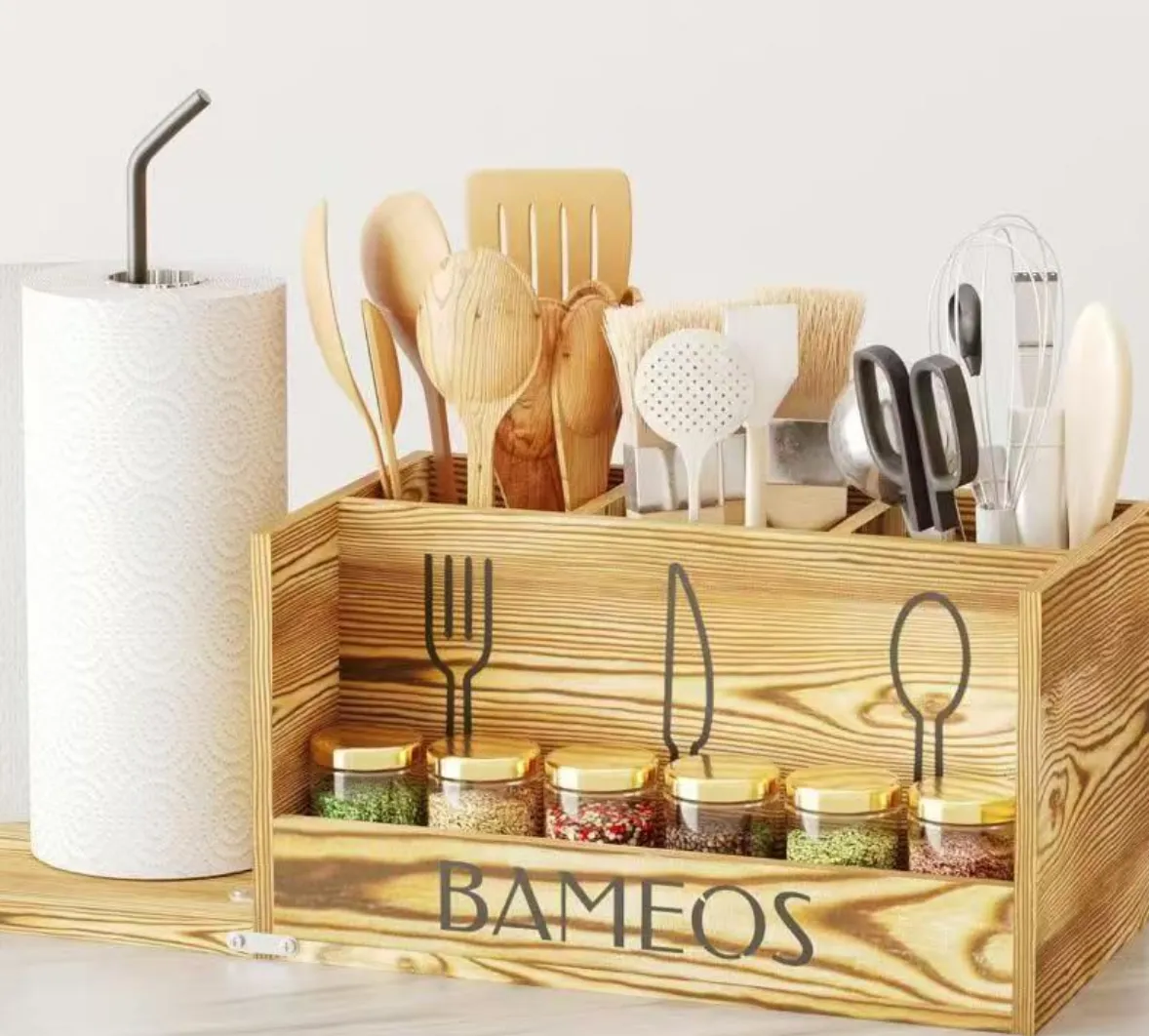
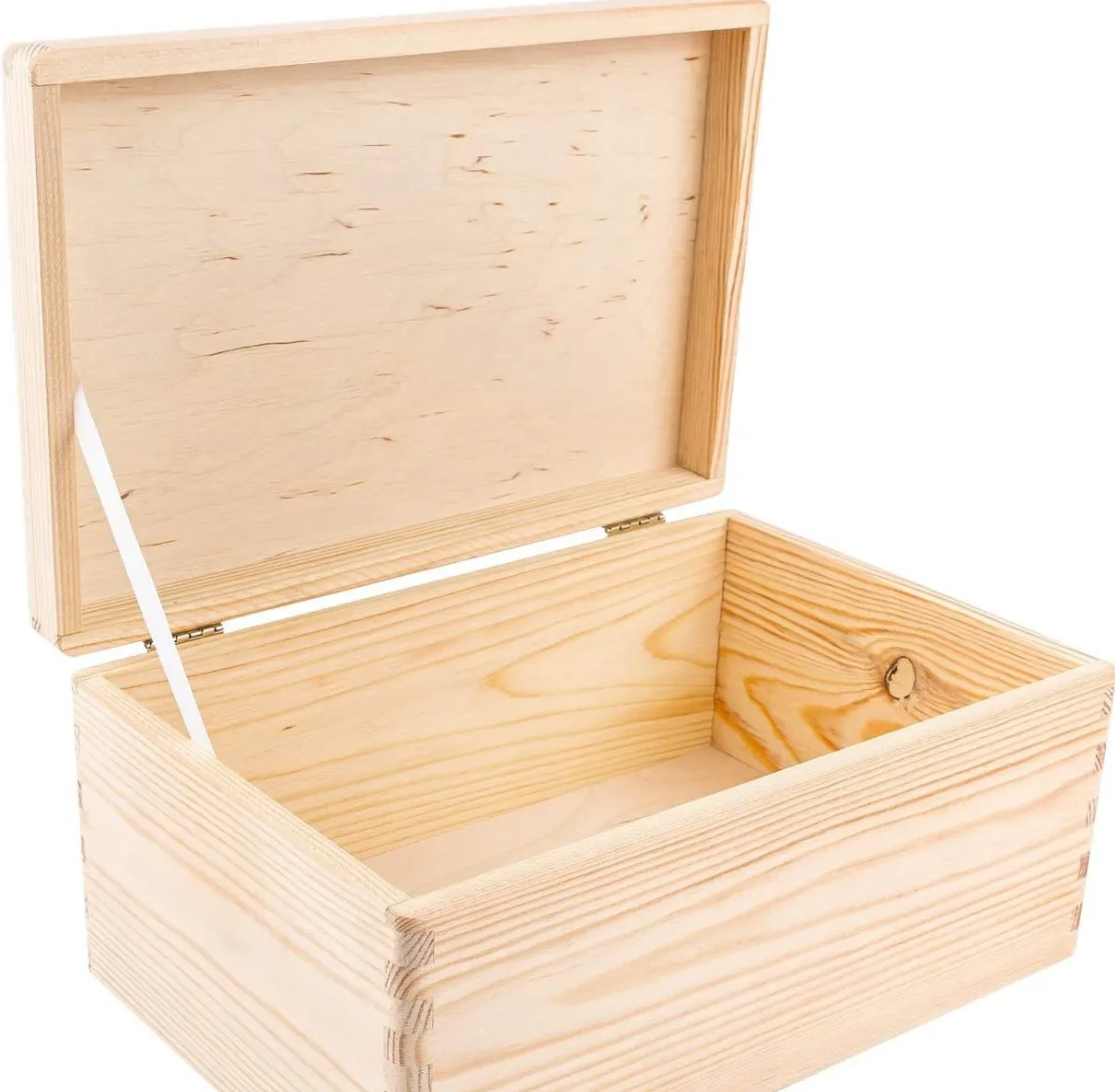
Origin & history. Sourced from European Scots pine and New Zealand radiata pine plantations. Pine is the classic crate and farmhouse wood — instantly recognizable, instantly evocative.
Visual character. Pale yellow-tan when fresh, ageing to a warm amber-honey. Knot-free grades feel clean and modern; rustic knotty grades carry obvious character. Soft, swirling grain pattern.
Why buyers choose it
- Best price-per-board-foot of any species we stock — perfect when budget is the brief.
- Takes wood burning, torch finish and stain in a way most hardwoods can’t match.
- Knot-free clear grade for modern looks, knotty grade for rustic crates — same supply chain.
- Ages with a warm amber patina that buyers find more attractive than day-one new.
Things to consider
- Softer than hardwoods — dents, scratches and tool marks show.
- Resin pockets can bleed if not properly kiln-dried (we kiln to 8% MC standard).
Best for
Bamboo — The Eco Hardwood
Harder than oak. Greener than anything.
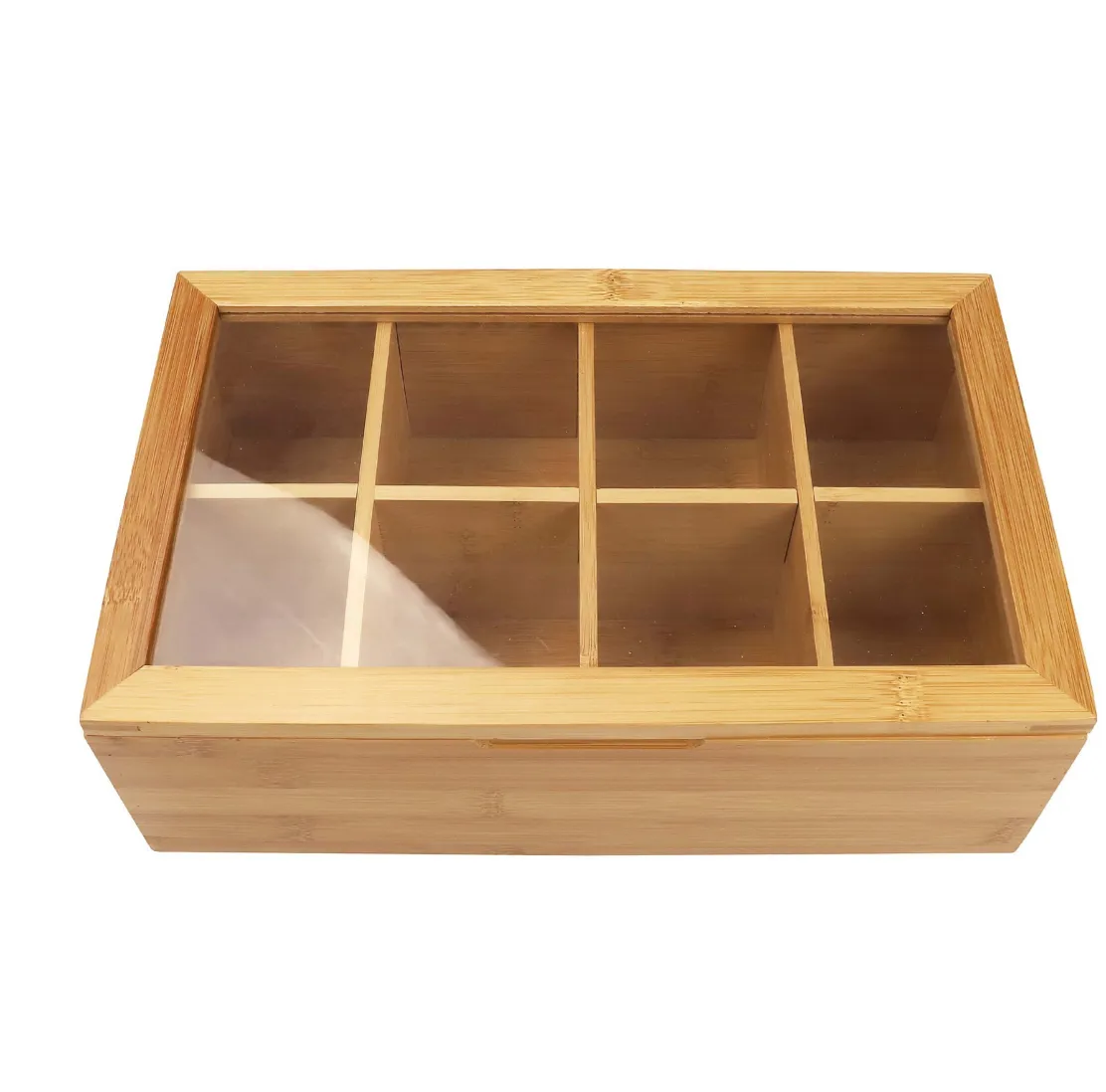
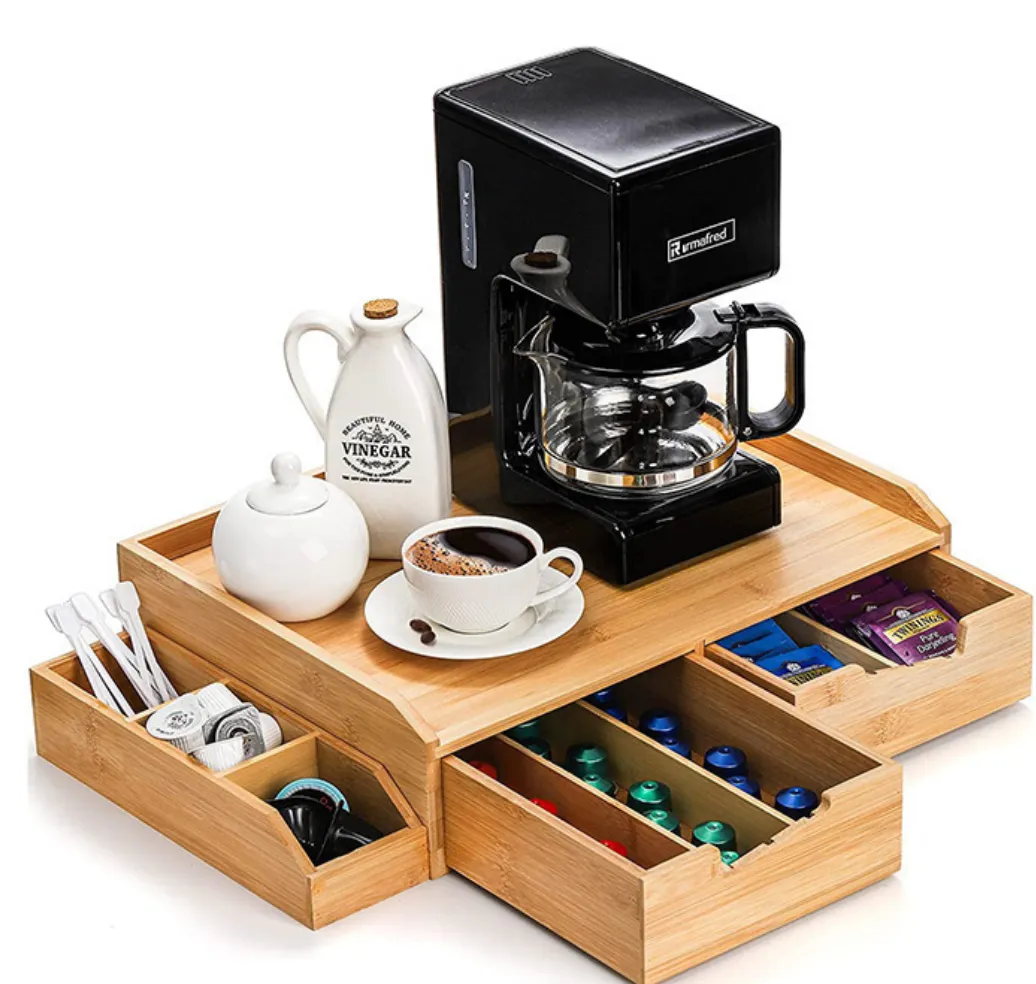
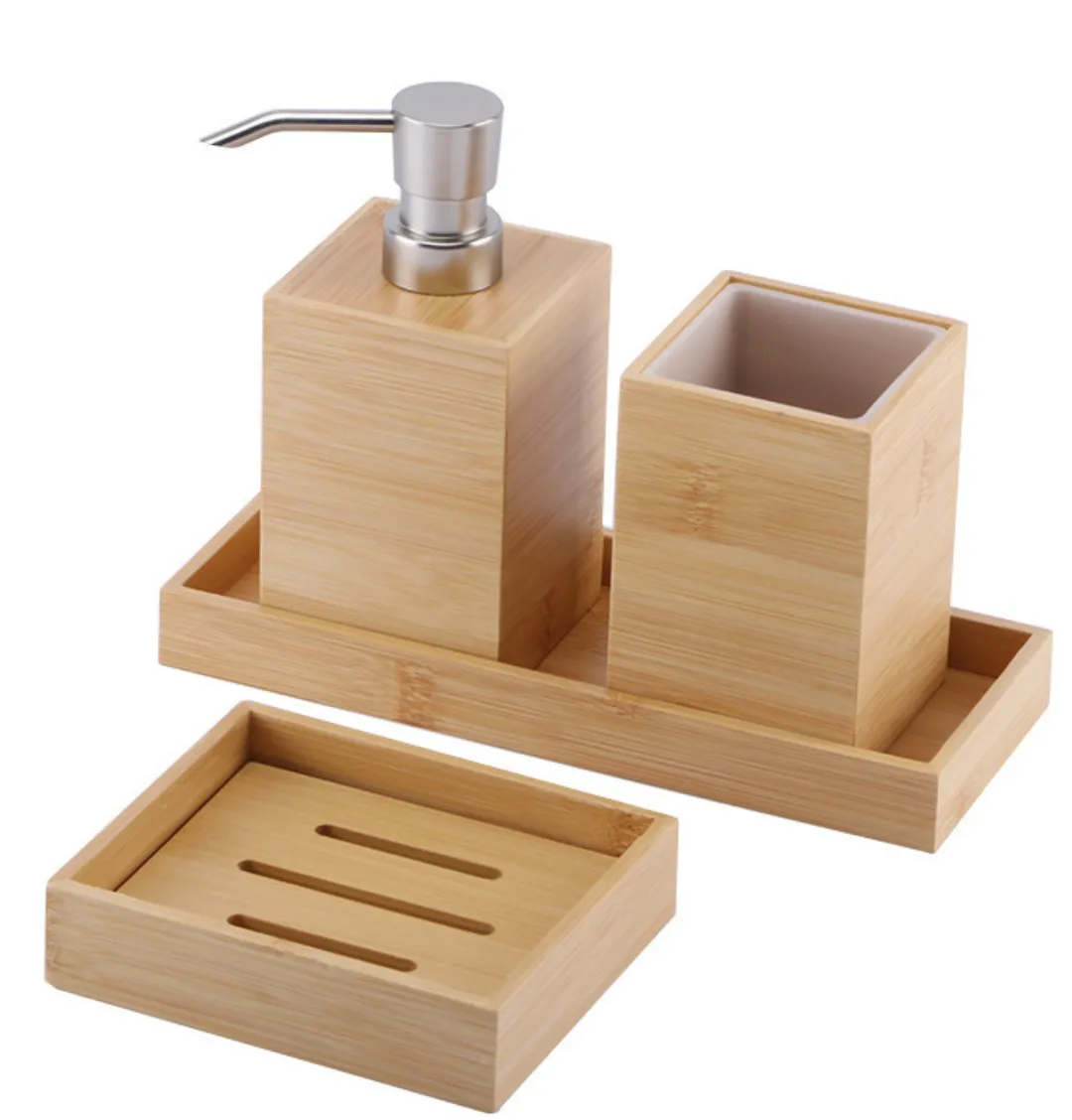
Origin & history. Moso bamboo from southern China — the only species hard enough for board production. Technically a grass, it regrows from the same root system in 5–7 years without replanting.
Visual character. Pale gold (natural) or warm caramel (carbonized through pressure-steaming). Unmistakable horizontal striping from the laminated stalks. Very modern, very clean.
Why buyers choose it
- The most renewable structural material we offer — regrows in under a decade with zero replanting.
- Naturally antibacterial and antimicrobial — preferred for kitchen, bath and tea storage.
- Janka 1380 — harder than red oak, denser than most temperate hardwoods.
- Natural and carbonized finishes give two distinct color palettes from one species.
Things to consider
- Cannot be deeply carved or relief-engraved — laminated structure splinters.
- Distinctive horizontal striping is iconic, but doesn’t suit every traditional aesthetic.
Best for
Acacia — The Character Wood
Honey to chocolate, in dramatic swirls.
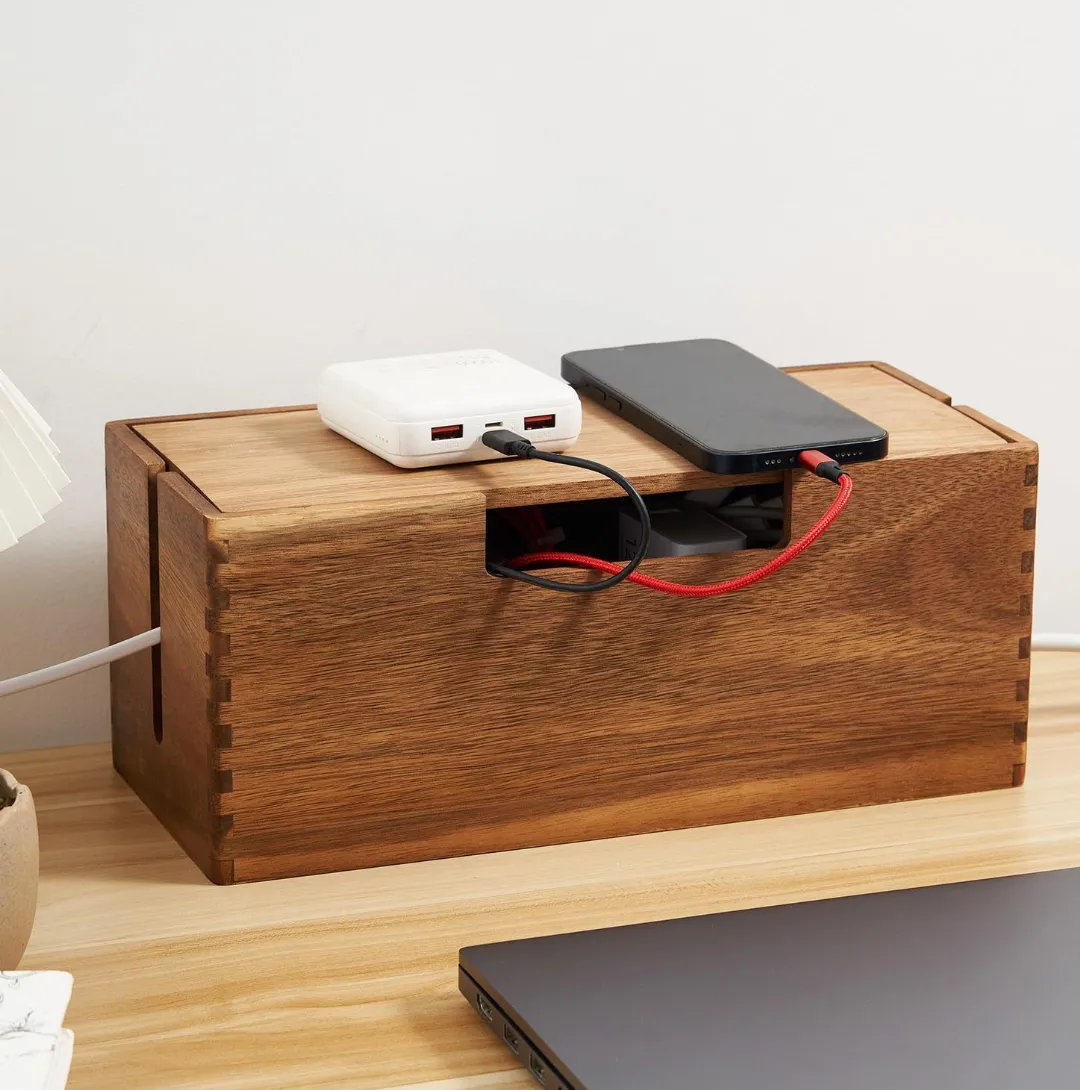
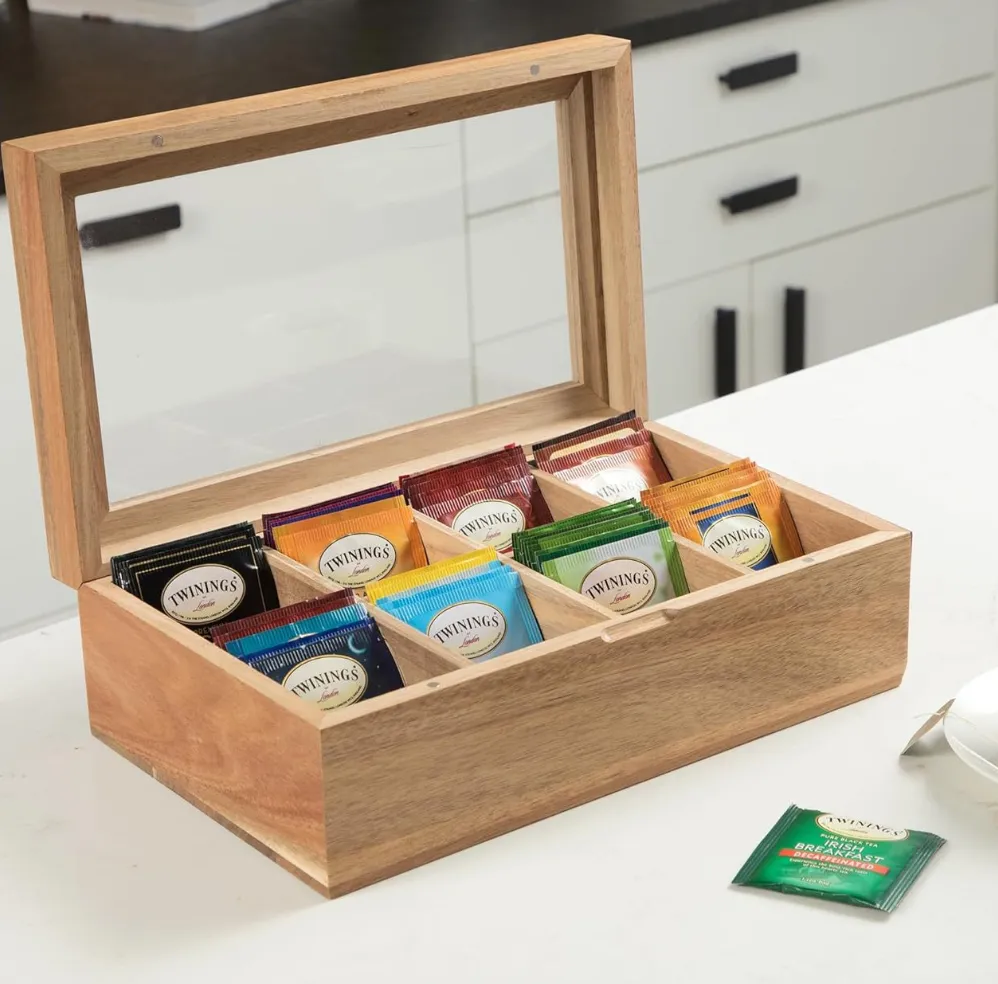
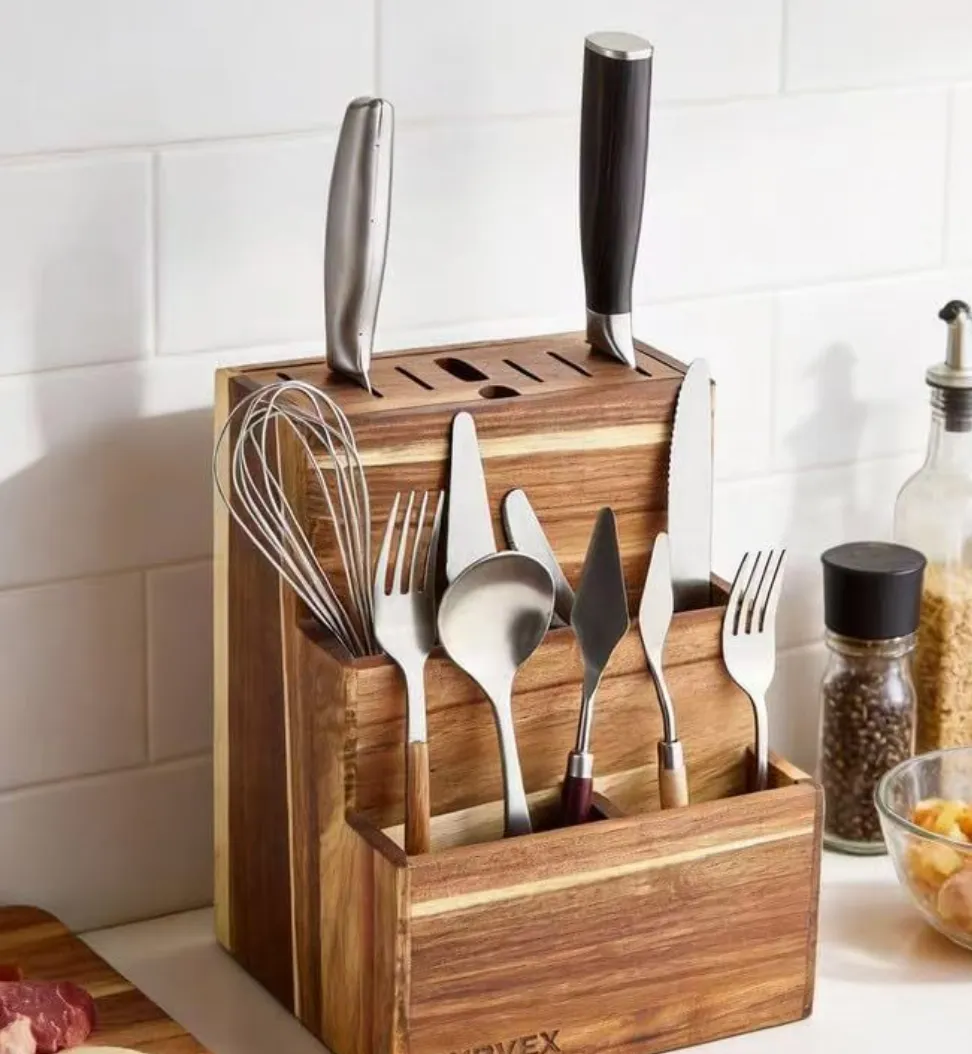
Origin & history. Plantation-grown across Vietnam, Indonesia and East Africa. A fast-growing tropical hardwood that delivers premium hardness at a mid-tier price — when sourced from FSC-verified plantations.
Visual character. Honey-yellow heart streaked with deep chocolate, in dramatic swirling figure. Every piece is different — character, not uniformity, is the point.
Why buyers choose it
- One of the hardest commercially available woods — daily-use durable.
- Naturally water-resistant from the wood’s own oils — minimal sealing needed.
- Dramatic figured grain finishes deeply with just a coat of oil.
- Premium look at a mid-tier price — best value in the “character hardwood” bracket.
Things to consider
- Color variation between pieces is wide — buyers who want uniformity should choose walnut or paulownia instead.
- Tropical hardwood — always confirm FSC chain-of-custody documentation.
Best for
Walnut — The Luxury Standard
When the box itself is the gift.
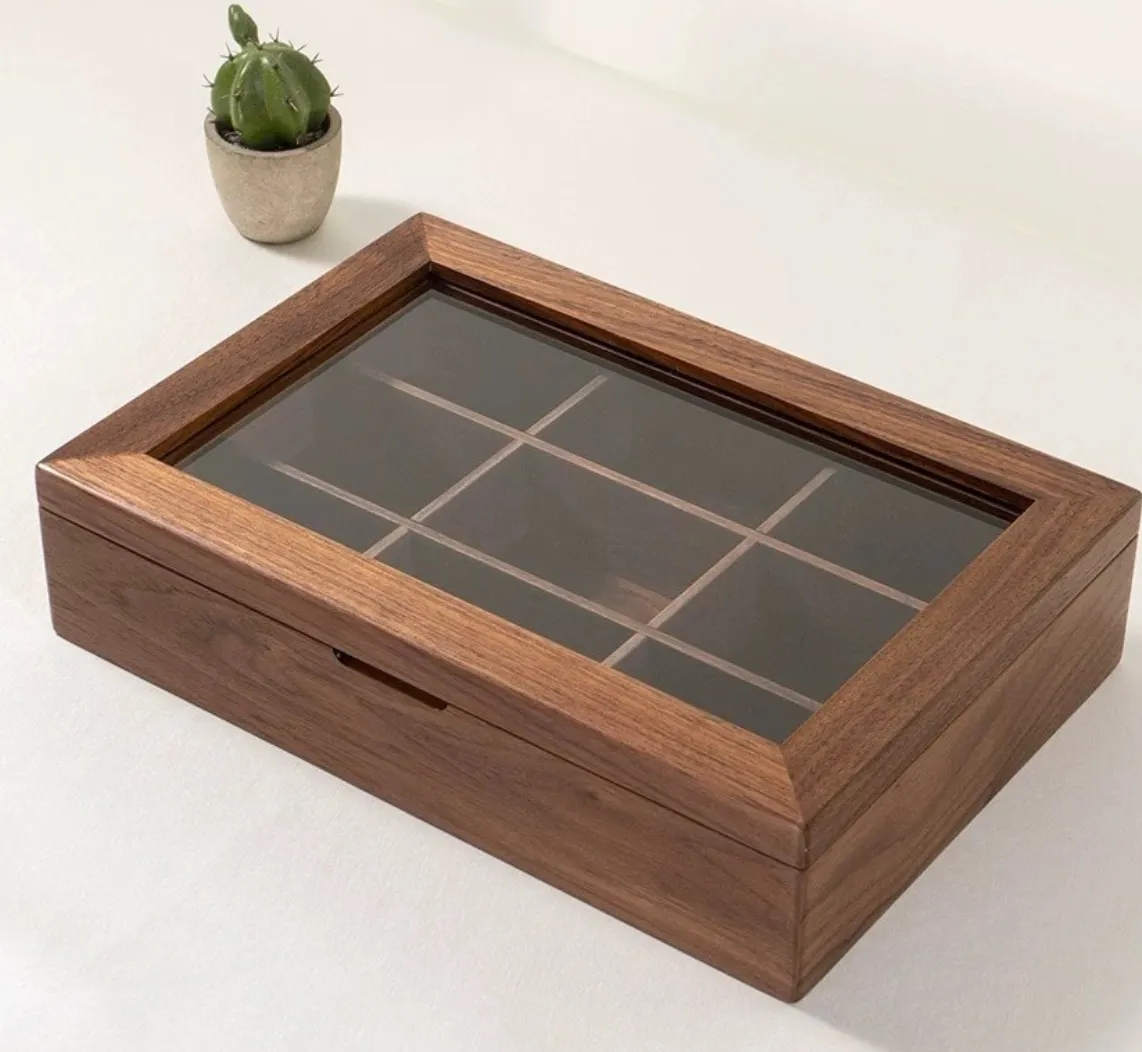
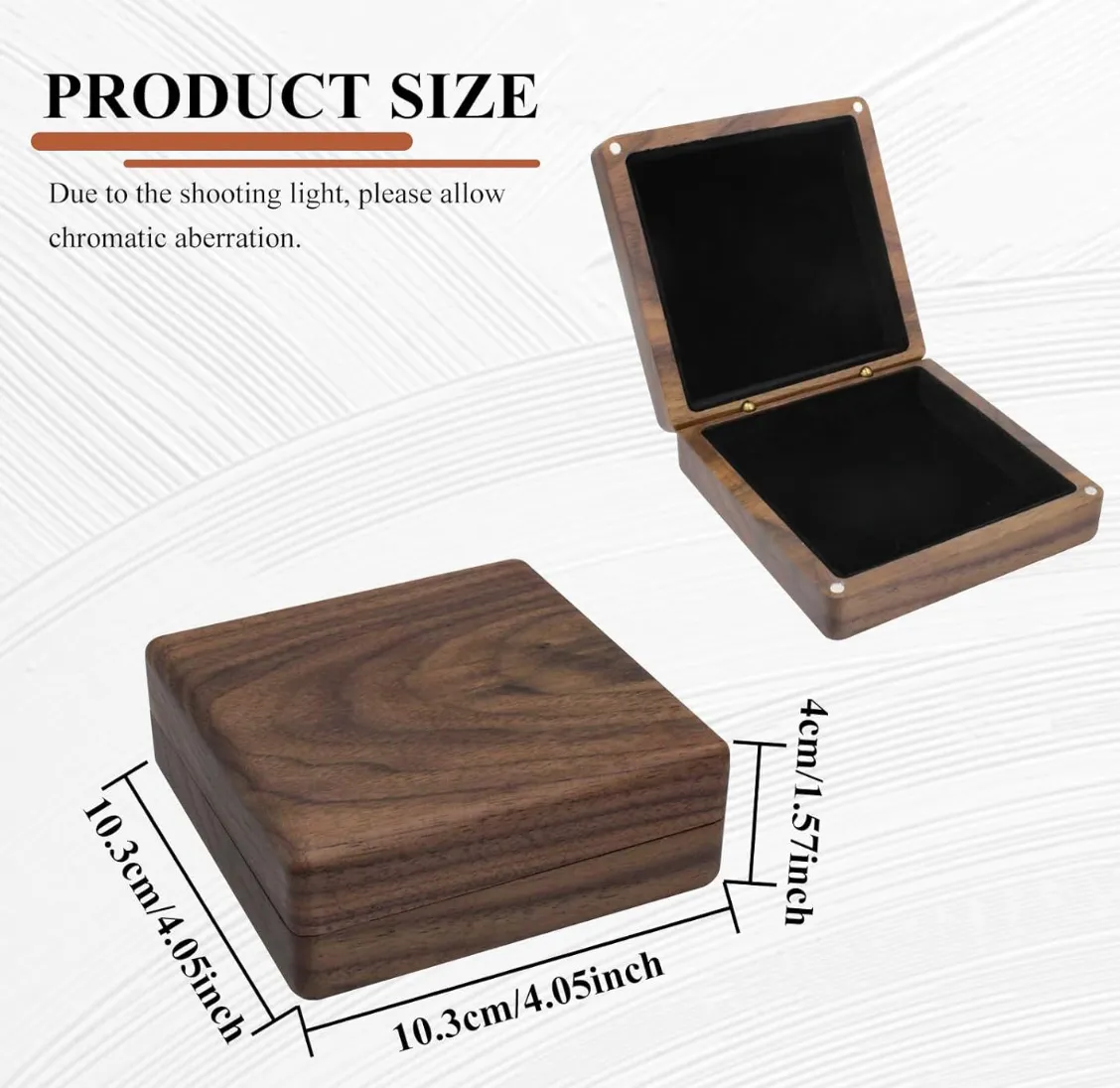
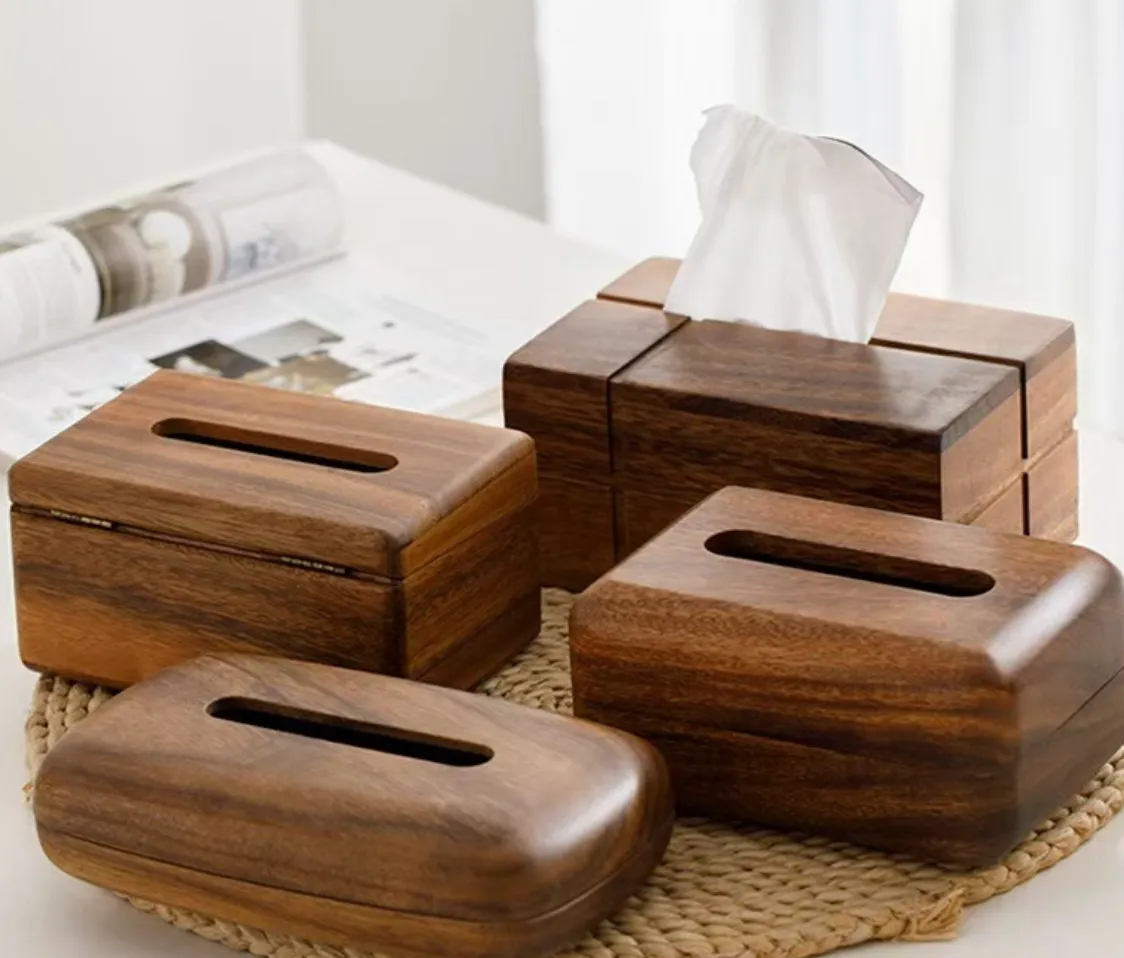
Origin & history. American black walnut from the Eastern and Central United States — the gold standard for fine woodworking and the default luxury timber for watches, jewelry and executive gifts worldwide.
Visual character. Naturally deep chocolate brown — no staining required. Fine straight grain, occasional figure, sands to a silky glass-like surface that finishes with a quiet glow.
Why buyers choose it
- The benchmark luxury hardwood — instantly recognizable, instantly premium.
- Naturally rich color — no staining, no chemical match-coats, no bleed-through.
- Sands to a glass-like surface that takes oil, wax and lacquer beautifully.
- Excellent dimensional stability — the right wood for tight-tolerance hardware fits.
Things to consider
- 4–6× the price of pine — reserve it for products where the box is part of the unboxing.
- Color may very slightly mellow with years of UV exposure — a feature, not a flaw.
Best for
Eight finishes, from raw to piano gloss
Finish is what your customer actually touches. The same paulownia body can read as a rustic craft kit, a modern minimalist box, or a piano-gloss luxury package — depending entirely on the finish above the wood.
Raw / Unfinished
No coating at all. The wood is sanded clean and shipped natural — ready for the end customer to paint, stain or decoupage themselves.
Sanded Smooth
Multiple progressive grits up to 240–400. No coating, but a tactile silk-smooth surface that already feels finished.
Oiled (Linseed / Tung)
Penetrating natural oil — no surface film. Deepens grain, food-safe options available, ages with a soft glow. Re-oil every 6–12 months.
Beeswax Polish
Soft beeswax buffed to a low sheen. Food-safe and warm to the touch. Less durable than oil, but more authentic for heritage pieces.
Lacquered
PU or NC lacquer in matte / satin / piano-gloss. Forms a protective film, evens color, and gives a uniform sheen across all panels.
Painted
Solid pigment paint — full Pantone matching. Hides grain entirely. Hand-sprayed in dust-controlled booths to avoid orange peel.
Stained
Tinted stain (light oak, walnut, ebony, bespoke colors) lets grain show through, then sealed with clear lacquer or oil top-coat.
Torched / Shou Sugi Ban
Surface charred with flame, then brushed back. Carbonized layer protects against rot and insects, with a dramatic black grain texture.
Seven ways to put your brand on wood
The wood and the finish set the stage — your branding closes the deal. Here’s a plain-English comparison of every method we offer in-house, with the species and surfaces each one looks best on.
Laser Engraving
CO₂ laser burns the artwork into the wood. Reads on every species, scales from prototype to bulk, holds detail down to 0.3 mm. Our default for logos.
Hot Foil Stamping
Heated brass die presses metallic foil (gold, rose gold, silver, copper, custom Pantone) into the surface. Premium tactile finish.
Debossing
Heated die presses logo into wood without ink or foil — pure indented impression. Subtle, sophisticated, ages with the box.
Wood Burning (Pyrography)
Iron tip burns the artwork in. Vintage, hand-crafted aesthetic. Slight char halo and depth variation are part of the look.
UV Printing
Direct full-color CMYK print cured by UV light. Photographic detail, gradients, multi-color artwork — all on bare wood.
Screen Printing
Solid spot color through a silk-screen — flat, bright, repeatable. Most economical method for high-volume single-color logos.
Inlay
Contrasting wood, brass or mother-of-pearl is set flush into a CNC-routed pocket. The luxury tier of branding.
Hardware that lasts
We stock European concealed hinges, brass surface hinges, neodymium magnets, and brass and combination locks. Mix and match — every box can be specified down to the hardware finish.
Surface Hinges
Visible brass or steel hinges mounted on the outside back. Classic, vintage, easy to repair.
Concealed Hinges
European-style hinges hidden inside the wall — exterior is completely clean. Soft-close optional.
Piano Hinges
Continuous full-length hinge — strongest option, even load distribution, works with very long lids.
Hidden Magnets
Neodymium magnets routed into the wall. Lid snaps shut with a calibrated, satisfying close. Zero visible hardware.
Brass Key Locks
Surface-mount brass lock with key. Classic appearance, unmistakable security cue.
Combination Locks
3-digit dial mechanism — no key to lose, no key to copy. Cleanest lock-down option for travel and shared spaces.
Wood is renewable — when sourced right
Every shipment we make is built from FSC chain-of-custody verified timber, with auditable paperwork from forest to factory floor. We work with paulownia and bamboo plantations in China, FSC-managed acacia plantations in Vietnam and Indonesia, FSC pine from European forests, and US-sourced black walnut.
Our finishes also matter — water-based lacquers and food-safe oils are the default for kitchenware and food packaging, and our coatings comply with EU REACH and US CARB Phase 2 on request.
When sustainability is a brand pillar, choose bamboo (regrows in 5–7 years) or paulownia (also 5–7 years, plus the lightest freight footprint of any wood). For premium hardwoods, ask us for the FSC certificate before approval — we issue it standard.
FSC chain-of-custody certified
Auditable paper trail from forest stand to factory pallet — issued on request, every shipment.
Renewable species first
Paulownia and bamboo regrow in 5–7 years — the most carbon-efficient wood we offer.
Low-VOC finishes available
Water-based lacquers, food-safe oils and beeswax — REACH and CARB P2 compliant on request.
Phytosanitary certificates
Issued for every solid-wood shipment — clean customs clearance into all major markets.
Wood Material FAQs
Choosing the right species is the first decision in any custom box project. Here is how our five core woods compare on grain, weight, durability and cost.
Which wood is best for a custom wooden box — paulownia, pine, bamboo, acacia or walnut?
There is no single “best” — it depends on your priority. Paulownia is the lightest and most economical, ideal for high-volume gift and packaging boxes. Pine is an affordable, easy-to-finish all-rounder. Bamboo is hard, eco-friendly and great for a modern look. Acacia offers rich grain at a mid price. Walnut is the premium choice for luxury, heirloom-grade boxes. Tell us your budget, look and use case and we will recommend the right fit.
What is the difference between paulownia and pine for packaging boxes?
Paulownia is extremely lightweight, dimensionally stable and resists warping, which lowers your shipping weight and cost on large orders — a reason it is popular for wine, tea and gift boxes. Pine is slightly heavier and denser, takes stain and paint beautifully, and has a warmer knotty character. For bulk packaging where weight and cost matter most, paulownia usually wins; for a traditional solid-wood feel, pine is a strong choice.
Is bamboo a good material for gift and storage boxes?
Yes. Technically a grass, bamboo is harder and more scratch-resistant than many softwoods, grows quickly (making it a sustainable option), and has a clean, contemporary grain that suits kitchen, tea and modern gift boxes. It does best with a sealed finish in humid environments, which we apply as standard.
Which wood is the most durable and moisture-resistant for boxes?
For everyday durability, acacia and walnut are the hardest and most impact-resistant of our core woods, while bamboo resists surface scratching well. No untreated wood is fully waterproof, so for humid or outdoor-adjacent use we recommend a sealed oil or lacquer finish and, where needed, a moisture-resistant interior lining. Let us know the end environment and we will spec accordingly.
Are your boxes made from solid wood, or MDF and plywood with veneer?
We offer both, and the right structure depends on your design and budget. Solid wood (paulownia, pine, acacia, walnut) gives an authentic feel and visible end-grain; engineered panels such as MDF or plywood with a real-wood veneer give larger flat surfaces, tighter cost control and excellent finish consistency. Many production boxes combine the two. We will tell you exactly what each quote is built from.
Can you match a specific wood tone or finish — stain, oil or lacquer?
Yes. We can stain lighter woods to mimic darker species, and finish in natural oil, matte or gloss lacquer, or painted colour. If you send a physical sample or a Pantone/RAL reference we will colour-match it on the chosen wood and confirm with a pre-production sample before the run.
Which wood is the most cost-effective for large orders?
Paulownia is typically the most cost-effective solid wood for high volumes thanks to its low material weight and fast workability, with pine close behind. Engineered panels with veneer can lower cost further on larger flat-panel designs. Per-unit price always depends on size, finish and quantity — share your specs for an exact figure.
Is your wood sustainably sourced and certified?
We work with responsibly sourced material and can supply wood meeting recognised standards including FSC (responsible forestry), CARB (formaldehyde emissions) and EU REACH, plus our ISO 9001 quality system. If your market requires specific certification documents, confirm the requirement with our team so we source and document accordingly.
Tell us what you’re building.
We’ll match the wood.
Send a sketch, a Pinterest board or a competitor sample — our team picks the right species, finish, branding and hardware combination, and prices it back within 24 hours.