How to Choose Wood for Custom Gift Packaging
Compare solid wood, veneer and bamboo for custom gift boxes. Check weight, finish, fit and samples. MOQ 200 per design. Send your specification for a quote.

On this page
Start with our wood and material guide, then use this checklist to compare materials for the same gift-box design.
A material choice needs more detail than a species name or a reference photograph. The case may use solid wood, a decorative veneer over board, or different materials for the lid, walls and base. Colour, weight, usable space and the finished logo all matter to the buyer. Define those requirements together before comparing prices. This guide explains what to request, what to inspect on a sample and what to record for repeat orders.
1. Begin with the contents and intended use
Decide whether the box will present a retail gift, support repeated access or hold a set of separate items. Provide the contents or dimensioned drawings, including any protective wrap. Allow for lifting the item out and for the lid, fittings and insert. A darker surface or heavier case may suit a particular brief, but neither establishes product quality on its own.
- Contents, outside box size and required usable interior
- Expected handling, storage conditions and opening method
- Preferred grain, colour, gloss and visible edge treatment
- Order quantity, individual packing and destination
2. Separate solid wood, veneer and the core
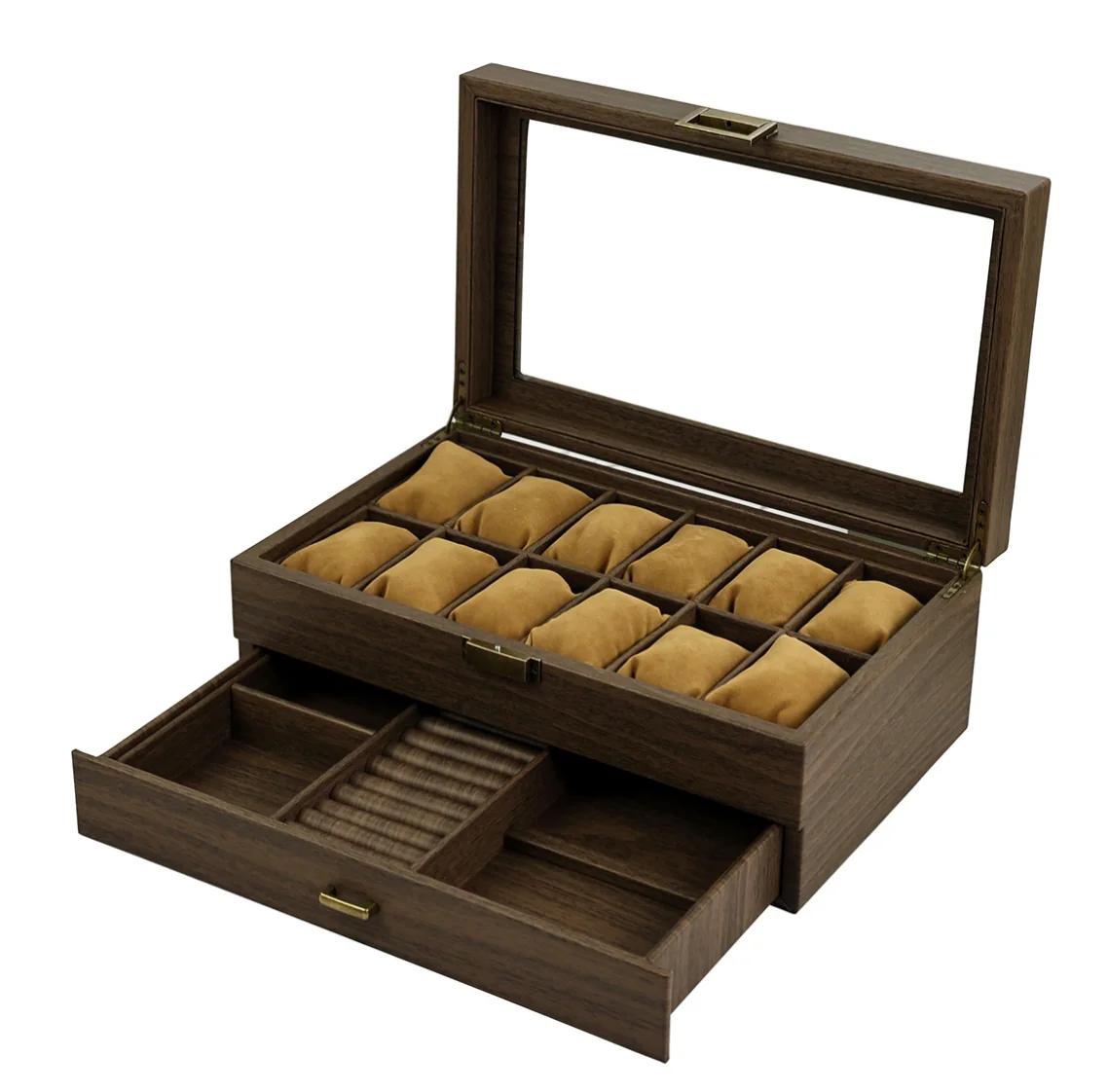
Ask for the material of each component. Solid wood and wood veneer are different constructions; a veneer identifies the surface layer, not the material underneath it. For example, our walnut-veneer single-watch box is a reference for a veneered appearance, with the core to be confirmed in the quotation. Record the substrate, visible veneer, base and lid separately. Agree how corners, exposed edges and the inside will be finished.
For bamboo, identify the supplied panel construction, visible strip pattern and finish rather than treating the material name as a complete specification. For any construction, request the actual finished weight and inspect the joints and edges. A wood-grain photograph cannot establish species, core, adhesive or performance. Avoid describing a veneered box as solid wood in your own product listing.
3. Compare the appearance of candidate materials
Use the paulownia box range and pine box range as visual starting points. Decide whether knots, grain contrast and colour variation suit the brief. Request samples with the proposed stain or coating; a material viewed unfinished can look different after finishing. Compare box weight at the same dimensions and wall specification, rather than applying a single density figure to every design.
In the bamboo box range, compare strip direction, joints, edge appearance and the chosen colour. The bamboo and acacia comparison guide raises related selection questions, but suitability must be checked for the actual gift-box construction. A material name alone does not establish antibacterial performance, food-contact suitability or an environmental benefit.
The acacia box range and walnut box range offer further grain and colour references. Approve an acceptable range of appearance rather than relying on one photograph. Ask whether the proposed surface is the named solid species, a veneer or a stained alternative. If you need a close colour match across sets or future orders, agree reference samples and a review method before production.
| Candidate | Compare on the sample | Record in the order |
|---|---|---|
| Paulownia or pine | Grain, knots, finish and finished weight | Species, grade, thickness and appearance limits |
| Bamboo panel | Strip pattern, joints and edge treatment | Panel construction, colour and finish |
| Acacia or walnut | Colour range, grain and logo contrast | Exact material and accepted variation |
| Decorative wood veneer | Surface, corners, base and exposed edges | Veneer species, core and edge construction |
4. Approve the finish and logo together
A clear coating, stain, paint or oil changes the surface you are buying. Send a colour reference and describe the gloss and feel you need. Use the finishing and branding guide to prepare the brief. Approve the logo on the selected material and finished surface, including placement, size, contrast and readability. A photograph cannot reliably identify the coating or branding process.

5. Check structure, fit and storage conditions
Use the wood-thickness selection guide to frame a discussion about panel spans, joints and hardware attachment. Thickness should be agreed for the complete design. Check the loaded sample, lid clearance, base support and opening action. Tell the supplier about expected storage and transport conditions, and agree relevant checks. No species should be selected on a promise that it can never move, crack or mark.
Request care instructions for the actual finish. For repeat orders, retain the approved sample and written tolerances. If material, coating or construction changes, review how the change affects fit, appearance, weight and the required checks before accepting a substitute.
6. Compare packed cost and shipping requirements
Request like-for-like quotations covering the case, finish, logo, insert, individual pack and export carton. The custom wooden box cost guide helps organise these line items; its examples are not a quote for your specification. Compare finished unit weight, carton dimensions, units per carton and packing method. A heavier box does not automatically produce a specific freight charge, and a lighter material does not guarantee the lowest delivered cost.
For marketplace orders, review the Amazon FBA packaging guide and confirm the current requirements for your destination and product. Obtain shipment estimates against the actual packing proposal. Avoid choosing material using an assumed container capacity, fee tier or universal freight-saving percentage.
7. Request evidence for the selected material
Use the wood sourcing guide to prepare traceability questions. State any document, test or sourcing claim your business needs, then ask what evidence covers the exact material and order. A supplier's general brochure or a report for another box does not establish coverage. Agree what can be supplied before using a certification, food-contact or environmental claim in your marketing.
8. Use a sample to complete the purchasing specification
Production MOQ is 200 pieces per design for OEM and ODM orders. Sampling is a separate stage with its scope, cost and timing agreed in advance. Production timing is confirmed for the selected design, materials, quantity and packing. Keep a record of open decisions so that competing quotations cover the same proposal.
- Approve core, surface, lid, base and finished dimensions
- Record colour range, grain limits, finish and logo placement
- Check the intended contents, insert, hinges or other fittings
- Confirm finished weight, individual protection and carton packing
- Retain the agreed sample, documents and acceptance checklist
Send the reference design, contents, material preferences, quantity and destination to request a gift-box quotation. Choose email for detailed specifications and attachments or WhatsApp for a quick discussion. Ask for any alternative material to be listed separately, with the construction and changes to the quote explained.
Wood selection questions
Details to settle before ordering custom gift packaging.
Does walnut grain mean the box is solid walnut?
No. Record the visible surface and core separately. A walnut appearance may come from solid walnut, walnut veneer or another specified surface. Ask for the construction of the lid, walls and base in writing.
Which wood makes the lowest-cost gift box?
Compare quotations for the same dimensions, construction, finish, logo and packing. Material name alone does not establish the lowest unit or delivered cost. Request actual finished weights and carton details.
Can every box in an order have identical grain?
Agree an acceptable appearance range using samples and written limits. Natural grain and colour can vary; one photograph does not define every unit. Confirm how visibly different pieces will be reviewed.
Does bamboo automatically make the box food-safe or sustainable?
The material name alone does not establish either claim. Check the panel, adhesive, finish, intended use and relevant evidence for the selected product before making a claim.
What are the MOQ and sampling arrangements?
Production MOQ is 200 pieces per design for OEM and ODM orders. Sampling has a separately agreed scope, cost and schedule. Confirm material, appearance, fit and packing on the sample before production approval.