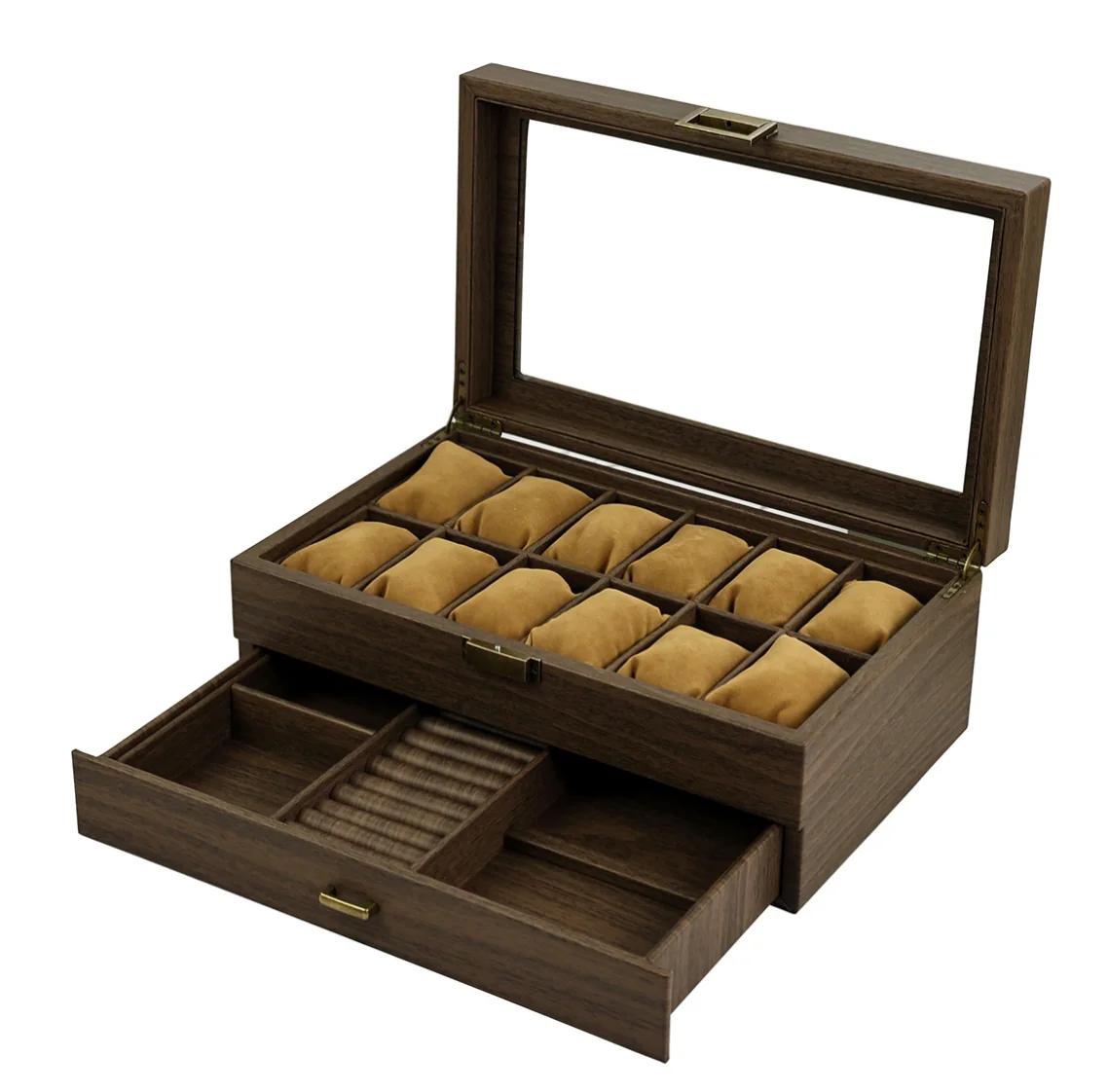
How to Specify Wooden Box Finishes and Logo Methods
Compare wooden box finishes, laser engraving, foil and printing. Specify colour, coating and sample checks. MOQ 200 per design. Request a tailored quote.

On this page
Start with our wood selection guide for gift packaging, then specify the surface finish and branding as separate parts of your brief.
A box can have a clear coating, a coloured surface and a logo applied by a different process. Describing all three as “the finish” leaves room for suppliers to quote different constructions. A useful brief names the visible surface, the coating system, the branding method and the acceptance sample. This guide explains what to compare before approving custom wooden packaging for production.
1. Identify the surface under the finish
Record whether the box is solid wood, veneered board or another construction. A wood-grain photograph does not establish the core, veneer thickness or coating. Use the wood material guide to prepare the questions, then ask for the selected model’s written specification. Identify the lid, base and internal components separately if their materials differ.
A reference from our walnut box range and one from our pine box range can help explain the appearance you want. They do not establish how another species, veneer or coating will reproduce it. Provide a physical reference where possible and agree an acceptable range of grain and colour variation.
2. Compare the logo methods on the actual surface
Laser engraving removes or marks surface material; foil stamping transfers a foil with a die; debossing forms a recessed impression; screen printing applies ink through a stencil. None gives a guaranteed result on every wood or coated surface. Confirm that the chosen method suits the substrate, panel thickness, coating and artwork. Browse the gift and packaging box range for possible formats before placing the logo.
| Method | What to specify | What to approve on a sample |
|---|---|---|
| Laser engraving | Artwork, position, size and the intended depth or contrast | Legibility, edges, colour variation and any effect on the coating |
| Foil stamping | Foil reference, die, area and placement | Transfer coverage, edge definition and adhesion on the selected surface |
| Debossing | Die, impression size and agreed depth | Readable detail, surface distortion and consistency across the grain |
| Screen printing | Ink reference, number of colours and print area | Colour, registration, coverage and adhesion after the agreed cure |
Ask which setup items, tooling and production operations the quotation includes. The least expensive method for one design may require extra preparation for another. Compare the same logo size, quantity, surface and packing; do not use an old per-box surcharge as a current quotation.

3. Name the coating and its application sequence
“Natural”, “matte”, “glossy” and “piano finish” describe appearance, not a complete coating specification. Record the selected coating or treatment, colour reference, gloss target, coated faces and edge coverage. If a visible veneer is involved, identify it separately from the core and the coating. Specify the interior as well as the outside.
The single piano-lacquer watch box is a supplied reference using veneered MDF. It is an example of why a glossy wood-grain appearance should not be described as solid wood. For your design, confirm the preparation, coating and logo sequence with the supplier, including drying or curing before handling and packing.
Combining oil, wax, lacquer, ink or foil needs compatibility checks for the actual materials. No generic treatment name establishes food-contact suitability, low emissions or a maintenance-free lifetime. State the intended contents and contact conditions, and request evidence applicable to the selected finished construction when your project requires it.
4. Approve the artwork and colour together
Send editable artwork, dimensions and a drawing showing the logo’s position relative to an edge or centreline. Identify small text, fine lines and large solid areas that must remain clear. Our manufacturing capabilities reference can help frame the discussion; the final method still needs approval on the chosen surface.
A digital colour reference helps communicate intent, but the underlying grain, coating and viewing light can change the finished appearance. Agree a physical colour and gloss sample and how variation will be judged. For a lined item such as the three-watch display case, approve exterior branding and the interior appearance as separate surfaces.
5. Test fit and handling with a finished sample
Inspect the complete box after the agreed finishing sequence. Check whether coated edges affect a sliding lid, a joint, a hinge recess or the available interior. The wood thickness guide helps define panel requirements, but there is no single allowance that works for every finish. Record the dimensions and clearances agreed for your design.
- Compare colour, gloss, texture and logo position with the agreed reference.
- Open the lid or drawer and inspect edges, corners and contact points.
- Check for transfer, sticking or marking against the contents and packing.
- Agree any rub, adhesion, moisture or other tests, including the method and acceptance criteria.
- Record acceptable natural variation and defects that require rejection.
Check the finished box with its actual contents and insert. The wooden box insert guide explains why a textile appearance or material name alone does not specify protection. Include lining, adhesive and packing contact surfaces in the approval. A casual handling check does not establish a stated service life or replace a required test.
6. Keep production approval and care instructions specific
Retain the approved sample, artwork revision and written finish specification together. Confirm how changes will be reviewed if a coating, ink, foil or substrate changes. The wooden box manufacturing guide provides process context; the finishing and inspection sequence for your order should be recorded in its specification.
Ask for cleaning and storage instructions for the selected system. Do not prescribe routine re-oiling for an unidentified finish or promise that lacquer needs no maintenance. Agree the protection used during packing, especially where surfaces touch sleeves, foam or other boxes, and inspect the packed sample before approving production.
7. Request a quotation with one comparable finish brief
MOQ is 200 pieces per design for OEM and ODM production orders. Pre-production sampling has a separate scope, cost and schedule. Use the sampling guide to plan approvals, then confirm the sample and production timing for the actual design rather than assuming a fixed allowance for every technique.
Send the reference model, dimensions, substrate, visible surface, coating, colour and gloss reference, logo artwork, quantity, packing and destination. Identify any testing or documentation required for the intended use. Request a finish and branding quotation by email for detailed specifications and attachments, or choose WhatsApp for a quick question. Both contact options are available.
Wooden box finish and branding questions
Details to agree before approving a production finish.
Is engraving a substitute for a surface coating?
No. Engraving is a marking process. The surface treatment or coating remains a separate specification, and the order of application can affect appearance. Approve the complete combination on the selected material.
Can a logo colour be matched from a digital file?
Use the file to communicate the target, then agree a physical finished reference. Grain, coating, ink or foil and viewing light can affect the appearance. Define acceptable variation with the sample.
Which branding method costs the least?
Request comparable quotations for the actual artwork, surface, quantity and packing. Preparation, tooling, print area and the number of operations can change the comparison; there is no fixed surcharge for every box.
Does a natural oil or wax make a box suitable for food contact?
The treatment name alone does not establish suitability. Specify the contents, contact conditions and destination, and check evidence for the exact treatment and finished construction. A report for a different box does not establish coverage.
How long will a finish last?
Service life depends on the complete coating or marking system, substrate, handling, cleaning and environment. Agree relevant tests and acceptance criteria for your use instead of relying on an unsupported number of years.
What is the production MOQ, and are samples included?
Production MOQ is 200 pieces per design for OEM and ODM orders. Sampling is a separate approval stage; agree its scope, cost and timing before it begins.