EVA vs EPE vs Velvet vs Felt: How to Choose an Insert for Wooden Boxes
A comprehensive guide to selecting the perfect insert material for your wooden boxes. Compare EVA foam, EPE foam, velvet, and felt liners across protection, cost, aesthetics, and sustainability.

On this page
Before finalizing your specifications, consult our low MOQ sampling guide.
When designing custom wooden boxes, the insert material is just as critical as the box itself. The wrong choice can lead to damaged products, increased costs, or a presentation that fails to impress your customers. In this comprehensive guide, we'll compare four popular insert materials—EVA foam, EPE foam, velvet, and felt—across key decision factors including protection level, cost-effectiveness, aesthetic appeal, environmental impact, and customization options.
Material Overview
EVA and EPE are closed-cell foams. EVA can provide a shaped support, while expanded polyethylene (EPE) is widely used for light cushioning. Performance depends on the foam grade, thickness and insert geometry. Velvet is a surface textile; felt is a non-woven material made from wool, synthetic fibres or blends. Neither textile alone guarantees transit protection.
| Material | Construction | Typical Role | Check Before Approval |
|---|---|---|---|
| EVA foam | Closed-cell foam | Shaped support and cushioning | Grade, density, hardness and fit |
| EPE foam | Closed-cell polyethylene foam | Pads, corners and cushioning | Grade, thickness and loaded performance |
| Velvet | Fabric or a separately specified flocked surface | Presentation and contact layer | Fibre, backing, adhesion and colour transfer |
| Felt | Non-woven wool, synthetic fibres or blends | Lining, dividers and contact layer | Composition, thickness and abrasion |
EVA Foam: Premium Protection
EVA foam can be cut to hold a product securely, but the material name does not specify its performance. Request the grade, density in kg/m³, thickness and hardness test method. Shore C is a hardness scale, not a density unit; hardness and density must be recorded separately. Approve the actual foam and cavity fit with a loaded sample. See the Luxury Magnetic Gift Box for an insert application.
EPE Foam: Versatile Cushioning
EPE is closed-cell expanded polyethylene, not open-cell foam. It can be used for pads, corner blocks and shaped supports. Select the grade and thickness for the product weight and shipping conditions rather than assuming it is always softer or less protective than EVA. Recycling depends on local PE-foam collection and on whether fabric or adhesive can be separated. See our wooden box cost guide.
Velvet: Luxury Presentation
Velvet can be supplied as a fabric covering; flocking is a separate surface process. Confirm the fibre, backing, adhesive and colourfastness of the chosen finish. A velvet surface can limit rubbing and improve presentation, but any required cushioning comes from the supporting structure. Compare layouts in our watch box design guide.
Felt: Fibre and Construction Matter
Felt may contain wool, polyester, recycled fibres or a blend. Specify composition, thickness, abrasion resistance and any backing or adhesive. A recycled-content or natural-fibre description does not by itself establish recyclability, compostability or a lower environmental impact. Confirm the evidence for the particular material. Compare surface options in our finishing and branding guide.
Head-to-Head Comparison
Material names alone cannot support a universal protection or sustainability rating. Compare candidate grades using the same product, package design and test conditions. The following checks identify the information to request before approving an insert.
| Check | EVA Foam | EPE Foam | Velvet | Felt |
|---|---|---|---|---|
| Protection | Test the specified grade and geometry | Test the specified grade and geometry | Assess the supporting cushion | Assess thickness and supporting cushion |
| Cost | Quote grade, cutting and tooling | Quote grade, cutting and tooling | Quote fabric and application | Quote fibre and cutting |
| End of life | Confirm local acceptance and separability | Confirm local acceptance and separability | Confirm fibre, backing and adhesive | Confirm fibre, backing and adhesive |
Decision Framework
Start with product mass, fragile points, surface sensitivity and the required shipping route. Specify internal clearances and how the buyer removes the item. Compare a shaped foam support with a textile-covered alternative, then test the complete packed box. Cutting method and tooling affect price; our production MOQ remains 200 pieces per design. See the wood, finish and hardware reference.
Illustrative Applications
For a watch, compare a shaped foam support with a fabric-covered cushion. For a candle jar, evaluate cavity fit, glass-to-wood clearance and leakage risks. For electronics, confirm any required antistatic properties as well as cushioning. These are design examples, not measured customer outcomes or quoted prices. See the Three-Watch Display Case for one layout.
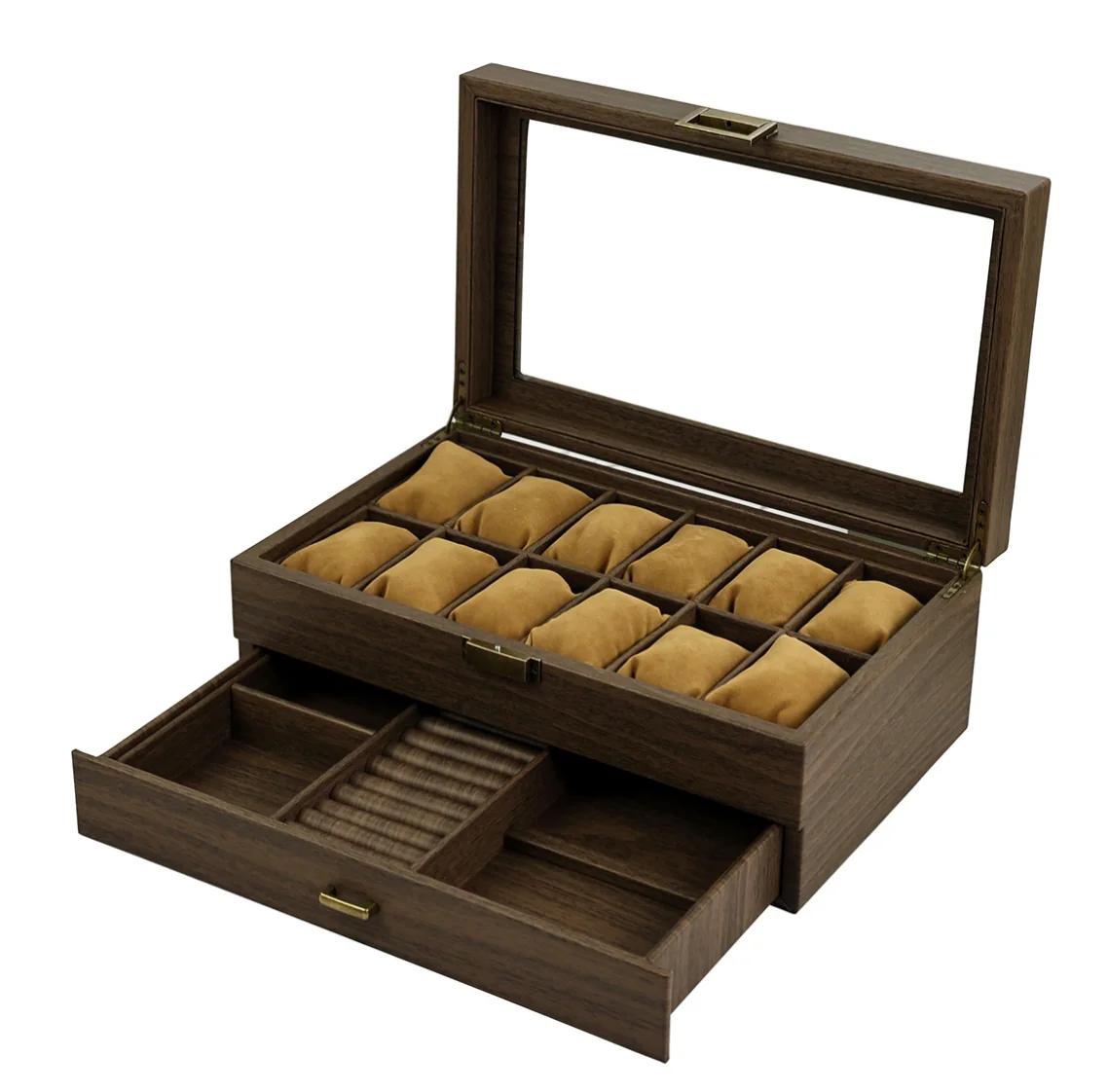
Compare the walnut-veneer single-watch box with the watch box with a jewelry drawer to plan pillow clearance and separate accessory storage. For eyewear, check folded-frame dimensions against the dividers in the six-slot sunglasses box. Confirm the lining fibre, cushion core and usable dimensions for the selected version before ordering.
Expert Selection Tips
Test samples with the actual product, retail box and outer shipping carton. Agree the drop, vibration and compression checks for the route and load; surviving one informal drop does not validate a shipping package. Also check recovery after storage, surface marking, odour and ease of removal. Record the approved grade and construction so production can reproduce the sample.
Our MOQ is 200 pieces per design for OEM, ODM and production trial orders. For more details, see China sourcing guide.
Conclusion
Choose the insert as part of the complete package. EVA and EPE can provide cushioning when correctly specified; velvet and felt can provide a contact surface or lining. No material is automatically the safest or most sustainable choice. Ask us to compare suitable constructions and request a quote with your product dimensions, weight and destination.
Technical References
Foam structure and recycling: Sealed Air PE foam guidance. Hardness measurement: Bareiss Shore testing guidance. Technical facts reviewed on 19 October 2026.