Wooden box closures compared: sliding, hinged, magnetic, drawer and lock
The closure is the first thing a wooden box buyer should specify and the last thing most spec sheets mention. This is a manufacturer’s comparison of the five closures we actually build — how each one is cut, what it does to lead time and MOQ, where each one fails, and how to pick without guessing.
On this page
Most buyers specify a wooden box in this order: size, wood species, branding, and then — almost as an afterthought — how it opens. That order is backwards. The closure decides the tooling, the assembly time, the hardware bill, whether the box can ship flat, and what the customer feels in the first two seconds of handling it. Change the closure late and you have effectively re-quoted the whole project.
This article is written from the production side. We build five closures across 186 catalogue products, and the figures below come from that catalogue rather than from a general packaging guide — real minimum order quantities, real lead times, and the real reasons a job slips. Where something depends on your specific artwork or dimensions, it says so instead of inventing a number.
The five closures at a glance
Every wooden box closure in production use is a variation on five mechanisms. The schematics below show what each one actually does structurally — not how it looks in a photograph, but where the moving part is and what holds it.
Sliding lid
A panel runs in a groove cut into the box wall. No hardware at all.
Hinged lid
The lid pivots on hinges fixed to the back edge. Built for repeated opening.
Magnetic closure
Neodymium magnets buried in the wall. The exterior stays unbroken.
Drawer
A tray pulls horizontally out of a fixed outer shell. One to twelve tiers.
Lockable
A hinged lid plus a key, cam or combination lock and reinforced hinges.
Structural comparison of the five closures. Lead times are the range observed across our own catalogue for that closure type; MOQ is the most common minimum, which moves with size and branding complexity.
One pattern in that table is worth pausing on. Magnetic is the only closure in our catalogue where nothing ships in under 30 days, and sliding is the only one that has ever gone out in 20. That gap is not a scheduling preference — it is the number of operations each closure requires, which the rest of this article walks through.
Sliding lid: the hardware-free workhorse
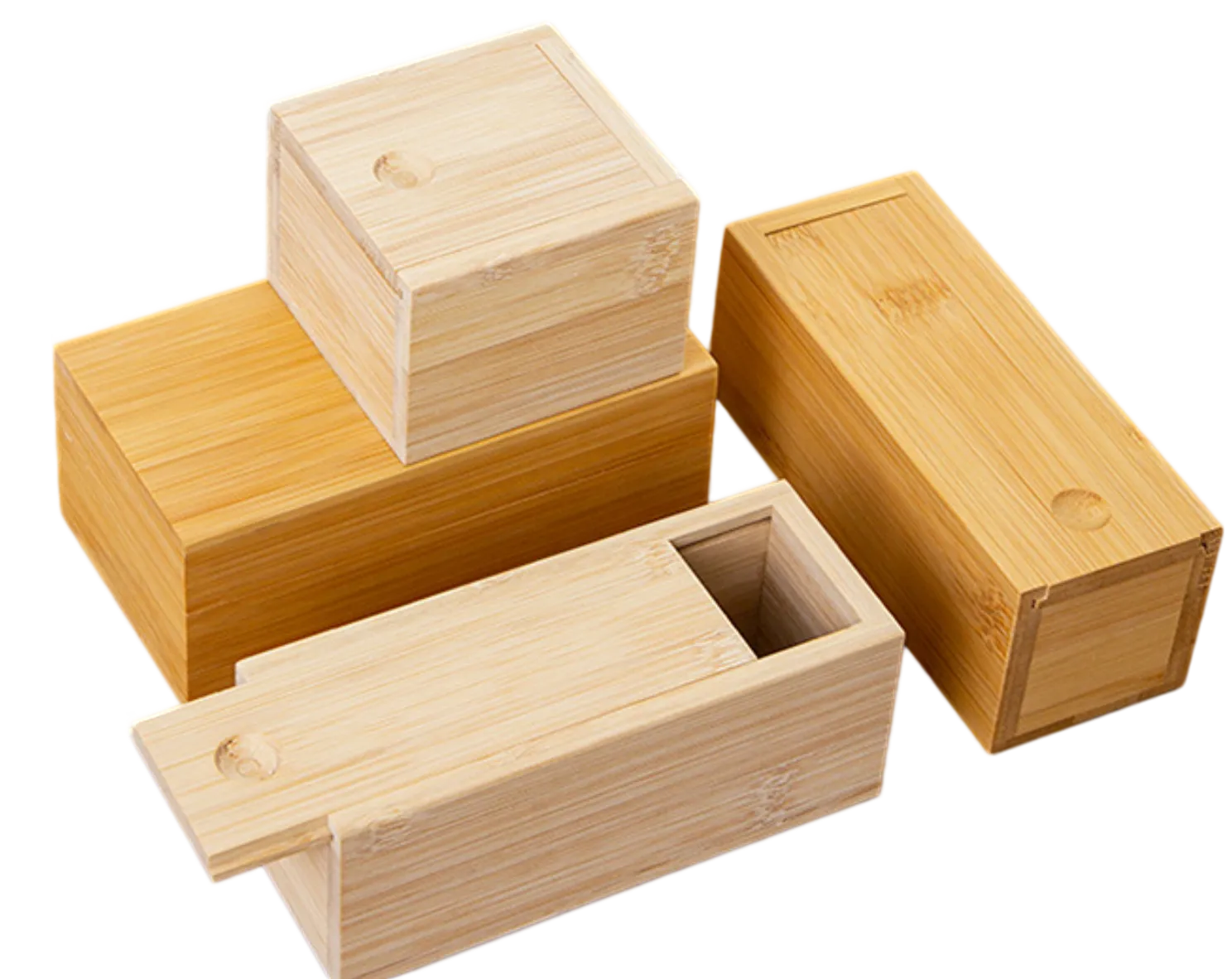
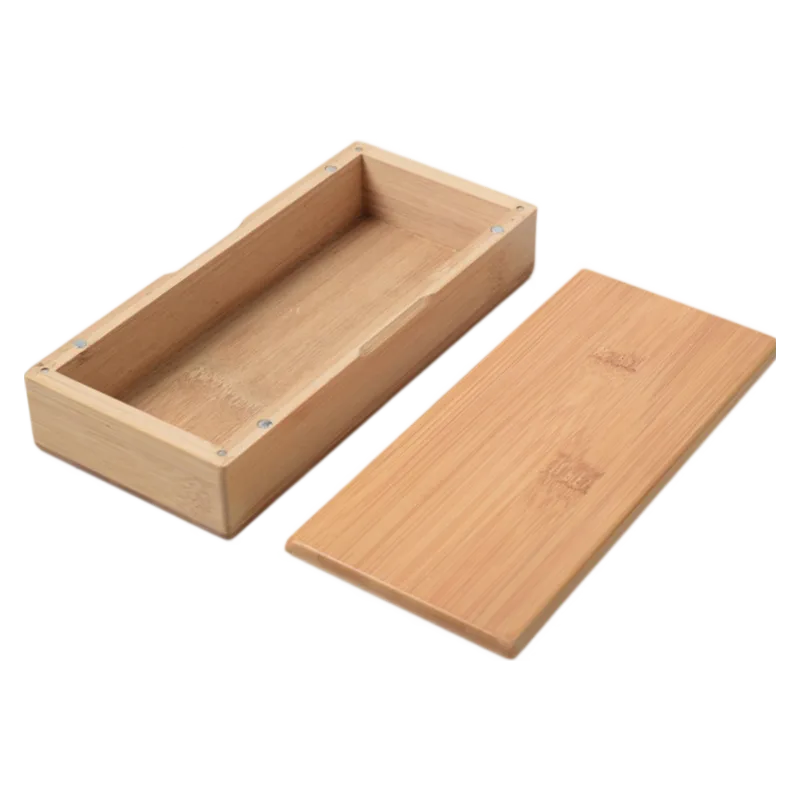
A sliding lid is a dado groove cut into two opposing walls and a panel sized to run inside it. There is no hinge, no magnet, no clasp — which means there is nothing to loosen after twenty thousand consumer open-and-close cycles, and nothing to rattle loose in an ocean container.
Commercially this is the cheapest closure we build, and the reason is assembly rather than materials. A sliding lid skips the hardware bill entirely and skips the fitting step that goes with it. It is also the only closure that ships genuinely flat when a programme needs it, which matters more than most buyers expect once air freight is involved.
The trade-off is retention. A sliding lid will not hold itself shut if the box is picked up by the lid, and it needs two hands and a deliberate motion to open. For a jewellery display or a retail demo unit where a customer flips the lid one-handed, that is the wrong behaviour. For gifting, cigars, tea, wedding favours and craft kits — where a slow, deliberate reveal is the point — it is exactly right. Our sliding lid boxes run in pine, walnut, bamboo and paulownia.
One production note that saves projects: the groove tolerance has to be matched to the finish. A lid sized for raw wood will bind once two coats of lacquer go on the panel edge. We cut for the finished dimension, not the bare one, which is why a lacquered sliding box and an oiled one are not the same part.
Hinged lid: the daily-use standard
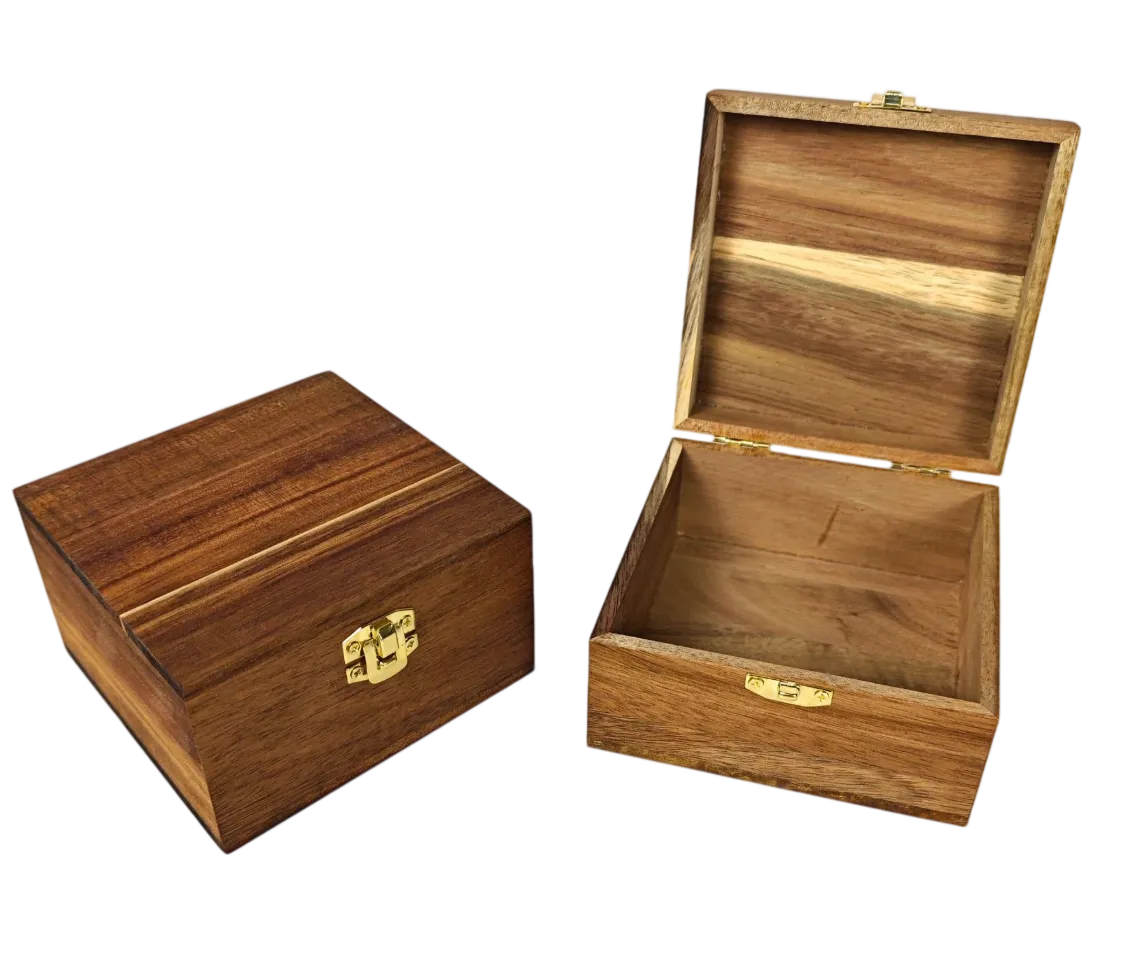
Hinged is the most common closure we make — 55 of our 186 catalogue products — and that is not an accident of taste. It is the only closure that behaves correctly when a box is opened every day for years: the lid stays attached, opens one-handed, and stops where the hardware tells it to stop.
The specification that actually matters here is the hinge itself, not the box. A stamped butt hinge is fine for a keepsake box opened at Christmas. A jewellery box on a retail counter, or a tool case in a workshop, needs a concealed European hinge or a soft-close mechanism, because the failure mode of a cheap hinge is not breakage — it is the lid gradually sagging until it no longer sits flush, which reads to the end customer as a defective product.
Lead times for hinged sit between 25 and 35 days across our catalogue, with 30 the most common. The spread is almost entirely hardware: standard brass moves at the short end, and anything requiring a soft-close damper or a specific finish match adds a procurement step. Browse the range at hinged wooden boxes.
Magnetic closure: the premium unboxing
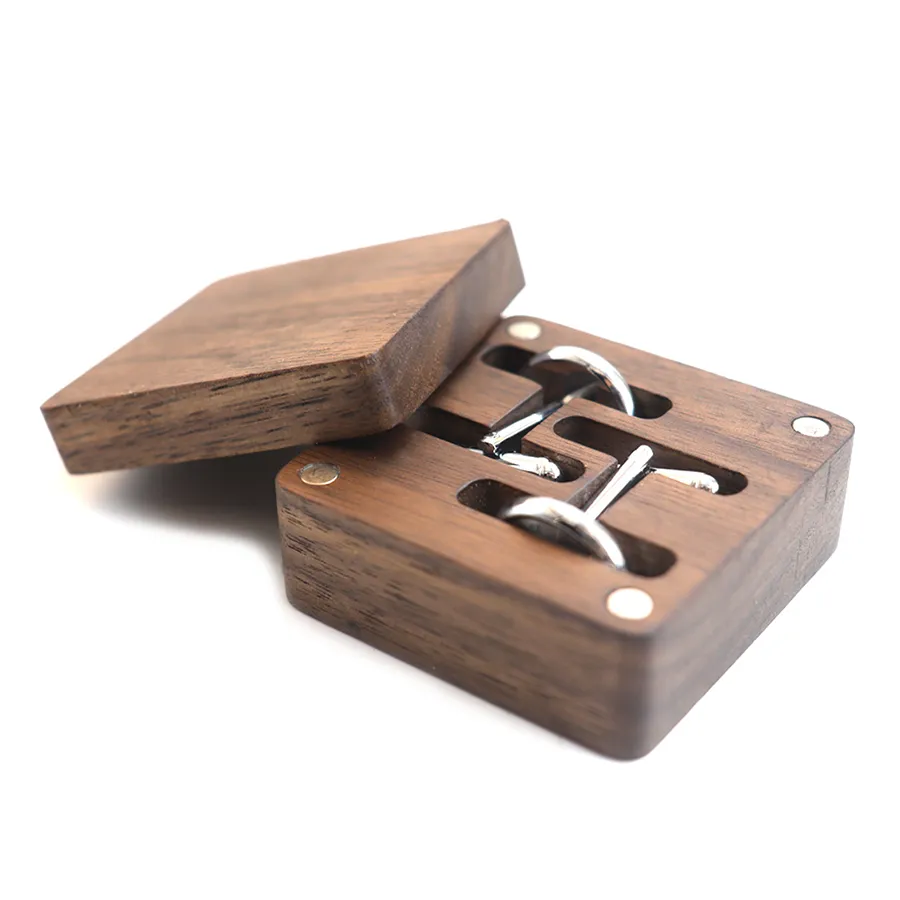
Magnetic closure is the modern premium standard for gift and retail packaging, and its whole value proposition is what you cannot see. Neodymium magnets are recessed into the lid and wall, capped, and finished over. The exterior stays a clean unbroken surface, and the lid closes with a soft deliberate snap that a hinge cannot reproduce.
Buyers should know that this is the slowest closure we build. Nothing in our magnetic range ships in under 30 days, and some runs go to 35. Magnets have to be seated at matched polarity, capped, and cured before finishing can start — several operations that all happen before the box looks like anything, and any one of them getting rushed shows up as a lid that sits proud or a magnet that works loose in transit.
It is also the closure where the wooden-box market gets confused with a different industry. Search for magnetic closure boxes and most of what comes back is rigid cardboard — paper-wrapped greyboard with magnets inside. That is a legitimate product with a very different cost base and a very different feel in the hand. If the brief says wood, confirm the supplier is quoting solid wood or wood veneer, not rigid card. Our magnetic wooden boxes are built on solid and veneered stock.
Drawer: when the contents need sorting
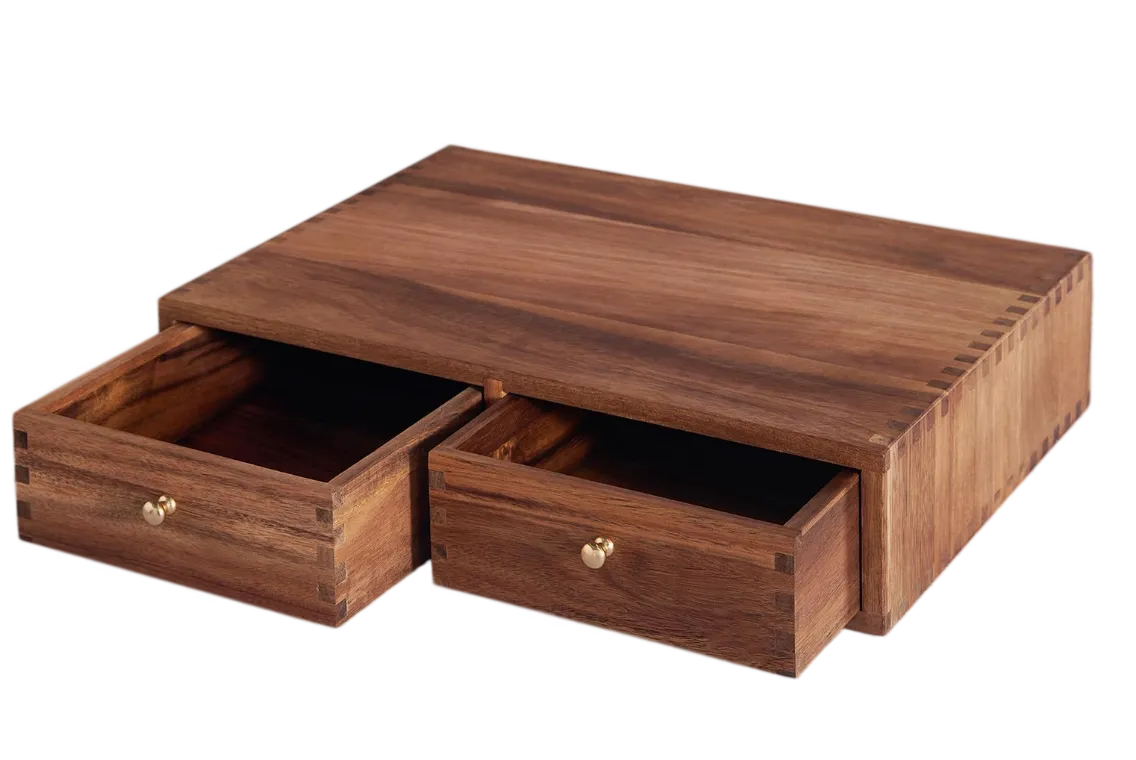
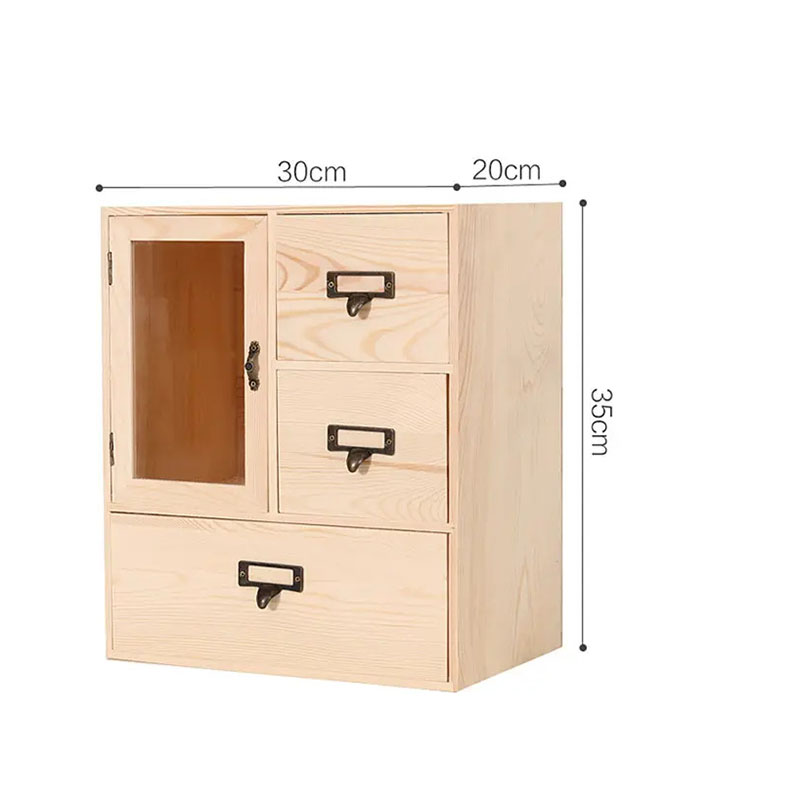
A drawer box solves a different problem from the other four. Every other closure gives you access from the top; a drawer gives you access without moving the box, and it lets you stack contents in tiers that stay separated. For jewellery, tools, office supplies and apothecary-style storage, that is worth the extra construction.
It is also the closure with the widest lead-time spread in our catalogue — 25 to 40 days. A single-tier drawer is close to a hinged box in effort. A twelve-tier cabinet with soft-close slides and label frames is a different product entirely, and the honest answer to "how long does a drawer box take" is that it depends on the tier count more than anything else. See the range at wooden drawer boxes.
The specification to get right is the slide. A drawer running directly on wood is quiet, cheap and will bind in humid climates as the timber moves. A drawer on metal slides costs more, adds weight, and behaves identically in Hamburg and Houston. For an export programme shipping to several climates, that consistency usually justifies the cost.
Lockable: when the box has to stay shut
A lockable box is a hinged box with a security requirement layered on top, and it is worth being precise about what that requirement is. A brass key lock deters a curious houseguest. A combination lock removes the problem of a lost key, which matters for a product sold at retail where the manufacturer never meets the end user. Neither is a safe, and any supplier implying otherwise is overselling.
What actually changes in production is the rest of the box. A lock concentrates force on the lid edge and the hinges every time someone tests it, so lockable boxes get reinforced hinges and thicker lid stock than the same box would otherwise need. Skipping that reinforcement is the single most common reason a lockable box comes back damaged. Our lockable wooden boxes run in walnut, oak, pine and acacia.
What the closure does to your lead time and MOQ
The table below is drawn from our own production records rather than industry averages. MOQ figures are the most frequent minimum for that closure; both MOQ and lead time move with box size, branding method and insert complexity, so treat these as the shape of the decision rather than a quotation.
| Closure | Products in range | Most common MOQ | Lead time observed | Main driver of the spread |
|---|---|---|---|---|
| Sliding lid | 18 | 200–300 pcs | 20–30 days | Finish type; groove is cut for the finished dimension |
| Hinged lid | 55 | 200–300 pcs | 25–35 days | Hinge specification and hardware procurement |
| Magnetic | 14 | 200–300 pcs | 30–35 days | Magnet seating and curing before finishing |
| Drawer | 25 | 200–300 pcs | 25–40 days | Tier count; slide type |
| Lockable | 9 | 200–300 pcs | 25–30 days | Lock type and hinge reinforcement |
Two things in that table surprise most first-time buyers. The first is that MOQ barely moves between closures — the minimum is driven by setup and material purchasing, not by which mechanism you choose, so switching from magnetic to sliding to hit a lower minimum does not work. The second is that lead time moves a great deal. If a launch date is fixed and the closure is not, that is the lever worth pulling.
How each closure is actually built
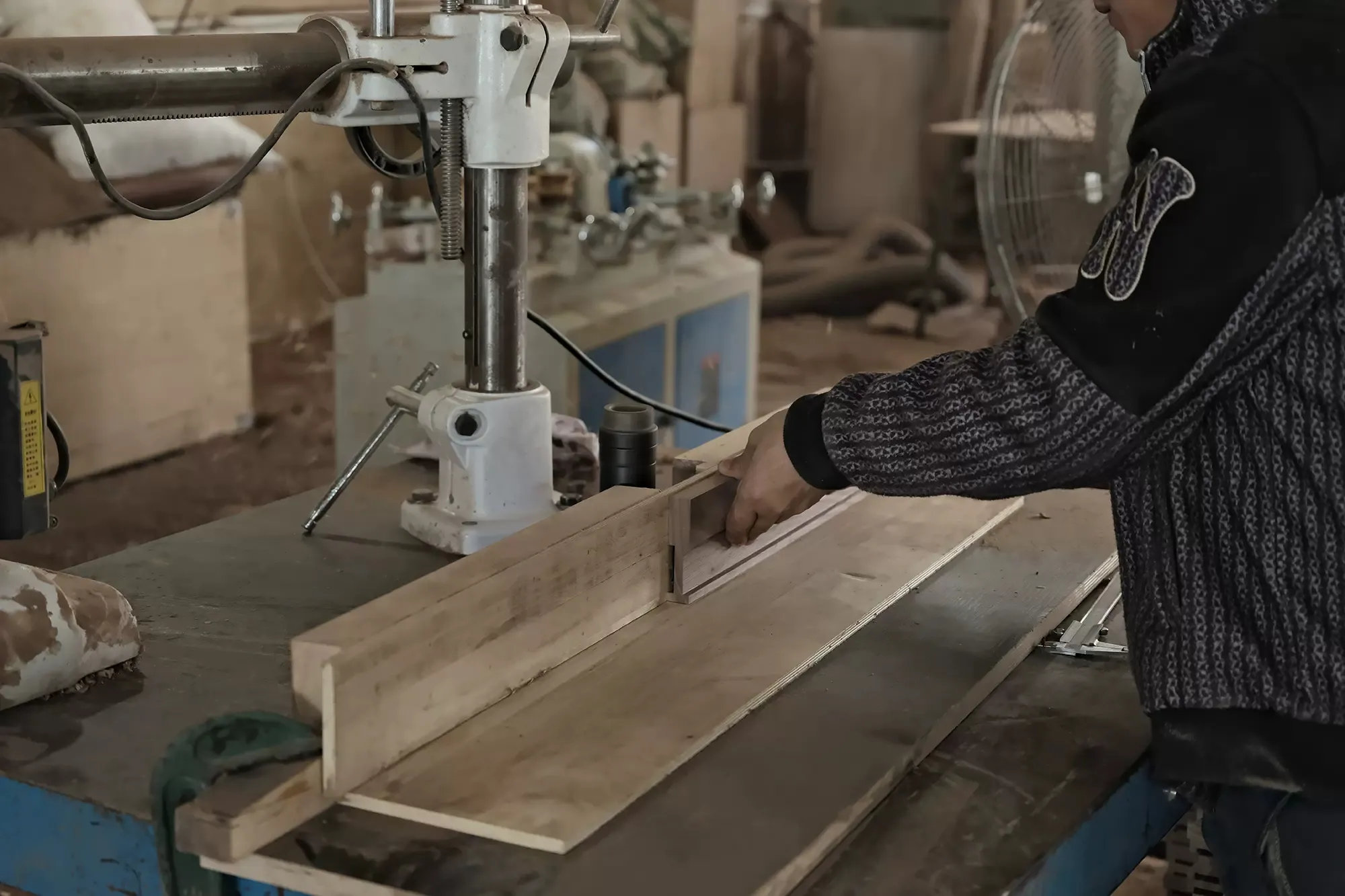
Every box we ship passes the same six stations regardless of closure. What changes is how much work happens at stations three and four, which is where the lead-time differences in the table above come from.
Cut to size
Kiln-dried stock is dimensioned. Identical for all five closures.
Shape cutting
Profiles and corner joints are cut.
Groove & mortise
Where sliding lids get their dado groove and magnetic boxes get their magnet seats.
Hardware fit
Hinges, slides, locks and magnets are seated. Sliding lids skip this station entirely.
Sanding & finish
Oil, lacquer or paint. Cannot start until adhesives have cured.
QC & export pack
Function check on every closure, then ISPM 15 compliant packing.
The six production stations. Sliding-lid boxes do almost nothing at station 4, which is why they clear the floor fastest; magnetic boxes do the most, and cannot start finishing until the magnet seats have cured.
The compliance work at station six is the same whichever closure you chose, and it is worth knowing what it covers. Solid wood packaging entering most markets needs treatment and marking under ISPM 15, the international phytosanitary standard — without it a container can be held at port. Any composite or veneered component sold into the United States falls under the California Air Resources Board composite wood rules for formaldehyde emissions. And retailers in Germany, France and the UK increasingly ask for FSC chain of custody documentation on the carton, not just a claim on the website.
Choosing without guessing
Rather than ranking the five closures, work through what the box has to do. In practice one question usually settles it.
- Will the end customer open it more than a few times? Hinged. Nothing else survives daily use without loosening.
- Is the unboxing moment the product? Magnetic — and budget the extra week.
- Is unit cost or air freight the binding constraint? Sliding lid. No hardware, no fitting step, ships flat.
- Do the contents need to stay sorted in tiers? Drawer, and settle the slide type before you settle the price.
- Does it need to stay shut when you are not there? Lockable, with the hinge reinforcement that goes with it.
If two answers compete — a jewellery box that is both a daily-use item and a premium unboxing, say — the daily-use requirement should win. A magnetic lid that gets opened twice a day will outlast the programme, but it will never feel as settled in the hand as a properly specified hinge, and the customer notices that on day thirty rather than day one.
Wood species is a separate decision from closure, and the two interact less than people assume: any of these five closures can be built in any of our species. Our material guide compares paulownia, pine, bamboo, acacia and walnut on weight, hardness, finish behaviour and certification.
The closure is the only part of a wooden box the customer operates. Everything else they simply look at.
If you are working through a specification now, send the dimensions, the contents, the expected open-frequency and your target landed cost, and we will come back with a closure recommendation and a sample timeline rather than a generic quote. Start at the contact form, or look through the gift and packaging range, which carries one product in each of the five closures for direct comparison.
Wooden box closure questions
The questions buyers ask us most often once they start specifying a closure.
Which wooden box closure is cheapest?
A sliding lid, in almost every case. It carries no hardware cost and skips the hardware-fitting step in assembly, which is where the saving actually comes from rather than in materials. It is also the only one of the five that ships genuinely flat, so it can reduce freight cost on top of unit cost. The saving disappears if the design needs one-handed opening or lid retention, because then it is the wrong closure.
Which closure has the longest lead time?
Magnetic. Across our catalogue nothing magnetic has shipped in under 30 days and some runs reach 35, because the magnets must be seated at matched polarity, capped and cured before finishing can begin. If a launch date is fixed, this is the closure most likely to put it at risk.
Does changing the closure lower the minimum order quantity?
No. Across our range the most common MOQ is 200 to 300 pieces regardless of closure, because the minimum is set by machine setup and material purchasing rather than by the mechanism. Switching from magnetic to sliding will change your unit cost and your lead time, but not your minimum.
Are magnetic wooden boxes the same as magnetic rigid boxes?
No, and this confuses a lot of first-time buyers because both sit in the same search results. A magnetic rigid box is paper-wrapped greyboard. A magnetic wooden box is solid timber or wood veneer with magnets recessed into the wall. They differ in cost base, weight, durability and feel. If the brief says wood, confirm which one the supplier is quoting before comparing prices.
Which closure is best for a box the customer opens every day?
Hinged, with hardware specified for the duty. The failure mode of an underspecified hinge is not breakage but gradual sag, until the lid stops sitting flush and the product reads as defective. For counter-top retail or workshop use, specify concealed European hinges or a soft-close mechanism rather than a stamped butt hinge.
Can I get a sliding lid box that still holds shut?
Partly. A friction-fit groove holds better than a loose one, and a detent or a ribbon pull helps. But a sliding lid will never retain like a magnet or a clasp, and if lid retention is a genuine requirement the honest answer is that sliding is the wrong closure rather than one to be modified.
Do all five closures work in every wood species?
Yes. Closure and species are independent decisions in our production, so any of the five can be built in paulownia, pine, bamboo, acacia or walnut. Species affects weight, cost, grain and finish behaviour; closure affects assembly, hardware and lead time.
What certification documents come with a wooden box order?
ISPM 15 phytosanitary treatment and marking is standard on solid-wood shipments, which is what keeps a container from being held at port. FSC chain-of-custody documentation is available per order, and CARB Phase 2 documentation covers any composite or veneered component going into the United States. Confirm which your market requires at quotation stage, because sourcing has to be documented from the start rather than certified afterwards.